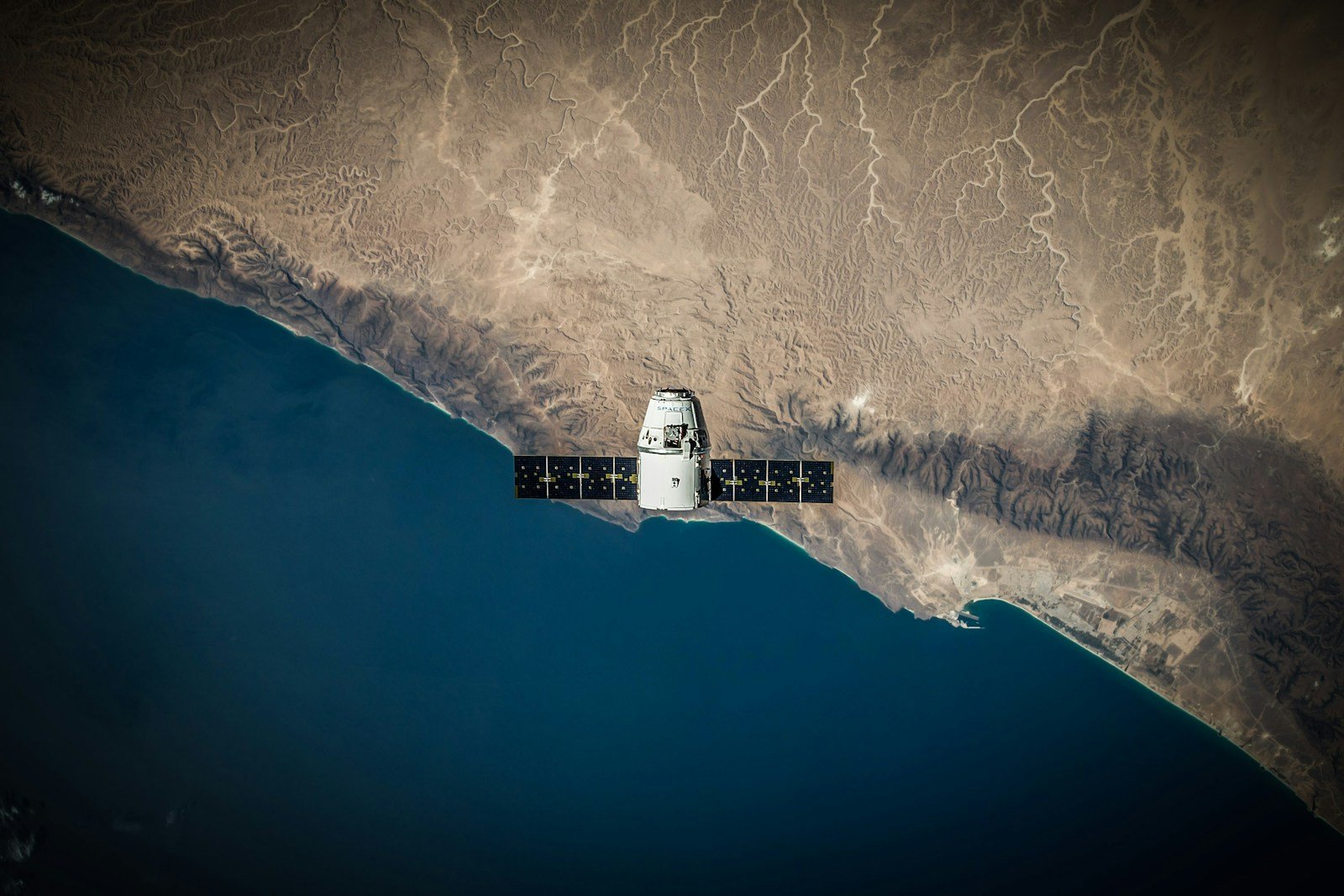
For thousands of years, humans have been driven by curiosity. From ancient explorers crossing oceans to modern scientists studying the deepest parts of the planet, the desire to understand our world has never faded. Today, technology is revolutionizing exploration in ways that previous generations could only imagine. Advanced tools, artificial intelligence, satellites, drones, sensors, and digital mapping systems are helping us discover new places, understand complex ecosystems, monitor environmental changes, and uncover secrets hidden beneath the Earth’s surface.
While much attention is often focused on space exploration, our own planet still holds countless mysteries. Vast oceans remain largely unexplored, remote rainforests conceal unknown species, and underground cave systems continue to challenge researchers. Technology has become the key that allows humanity to venture into these difficult environments safely and efficiently.
From tracking wildlife and mapping the ocean floor to predicting natural disasters and preserving historical sites, technological innovation is transforming the way we explore and understand Earth. This article examines how technology is helping us explore our world and why these advancements are crucial for science, conservation, and future generations.
The Evolution of Exploration Technology
Exploration has always depended on technology. Early explorers relied on compasses, maps, telescopes, and navigation instruments to travel across unknown territories. These tools enabled discoveries that reshaped human understanding of geography and culture.
Today, exploration technology has evolved dramatically. Modern explorers use sophisticated equipment capable of collecting massive amounts of data, communicating instantly across continents, and reaching environments once considered inaccessible.
Advances in computing power, satellite communication, robotics, and artificial intelligence have transformed exploration into a highly precise scientific process. Researchers can now gather information faster, analyze it more accurately, and share discoveries with the world almost instantly.
Satellites: A Bird’s-Eye View of Earth
One of the most important technologies helping us explore our world is satellite technology.
Satellites orbiting Earth provide detailed images and data about:
- Landforms
- Forests
- Oceans
- Weather systems
- Ice caps
- Urban development
High-resolution satellite imagery allows scientists to monitor changes occurring across the planet in real time.
For example, satellites help track:
- Deforestation in rainforests
- Melting glaciers
- Agricultural productivity
- Natural disasters
- Climate change effects
Because satellites can observe remote regions continuously, they provide valuable information that would be difficult or impossible to collect from the ground.
Modern satellite systems have become essential tools for environmental research, resource management, and global exploration.
Geographic Information Systems (GIS)
Geographic Information Systems, commonly known as GIS, have revolutionized mapping and exploration.
GIS combines geographic data with advanced computer analysis to create detailed maps and visualizations. Scientists use GIS to understand relationships between various environmental and geographical factors.
Applications of GIS include:
- Urban planning
- Wildlife conservation
- Disaster management
- Archaeological research
- Environmental monitoring
By layering multiple datasets together, GIS helps researchers identify patterns and make informed decisions about land use, conservation, and development.
The ability to visualize complex information geographically has greatly enhanced our understanding of Earth’s systems.
Drones Expanding Exploration Capabilities
Drones have become one of the most versatile exploration technologies available today.
These unmanned aerial vehicles can access areas that are difficult, dangerous, or expensive for humans to reach.
Drones are used for:
- Wildlife monitoring
- Forest surveys
- Agricultural analysis
- Geological research
- Disaster assessment
They can capture high-resolution images and videos while carrying specialized sensors that collect valuable environmental data.
Researchers studying volcanoes, mountains, glaciers, and remote islands increasingly rely on drones to gather information safely and efficiently.
Drones also help conservationists monitor endangered species and protect natural habitats from illegal activities such as poaching and deforestation.
Artificial Intelligence and Exploration
Artificial Intelligence (AI) is transforming how we explore and analyze the world around us.
Modern exploration generates enormous amounts of data. AI helps scientists process this information quickly and identify meaningful patterns.
AI applications include:
- Image recognition
- Wildlife tracking
- Climate modeling
- Geological analysis
- Environmental monitoring
Machine learning algorithms can analyze satellite images, identify changes in ecosystems, and detect anomalies that may indicate environmental threats.
AI-powered systems are also helping researchers discover new species, map unexplored regions, and improve scientific accuracy.
As AI continues to advance, its role in exploration will become even more significant.
Exploring the Oceans with Technology
Although oceans cover more than 70 percent of Earth’s surface, much of the underwater world remains unexplored.
Technology is helping scientists uncover the mysteries hidden beneath the waves.
Underwater Robots
Remotely operated vehicles (ROVs) and autonomous underwater vehicles (AUVs) can explore extreme depths where human divers cannot survive.
These robotic systems:
- Capture images
- Collect samples
- Measure environmental conditions
- Map the ocean floor
Sonar Technology
Sonar systems use sound waves to create detailed maps of underwater landscapes.
Scientists use sonar to discover:
- Shipwrecks
- Underwater mountains
- Deep-sea trenches
- Geological formations
Ocean Monitoring Systems
Advanced sensors continuously monitor ocean temperatures, currents, and ecosystems.
These technologies help researchers understand marine life and assess the impact of climate change on ocean environments.
Discovering New Species
Technology plays a crucial role in biodiversity research.
Scientists continue discovering previously unknown species across the globe, often with the help of advanced technologies.
Tools used include:
- DNA sequencing
- Motion-activated cameras
- Acoustic sensors
- AI-powered image analysis
Camera traps allow researchers to monitor wildlife without disturbing natural habitats.
DNA analysis helps scientists identify species and understand evolutionary relationships.
These innovations are expanding our knowledge of Earth’s biodiversity and helping conservation efforts.
Technology in Rainforest Exploration
Rainforests are among the most biologically diverse ecosystems on Earth.
However, dense vegetation makes exploration extremely challenging.
Technology assists researchers through:
- Satellite imagery
- Drone surveys
- Environmental sensors
- GPS tracking
Scientists can monitor forest health, track wildlife movements, and identify areas threatened by logging or climate change.
Remote sensing technologies provide valuable insights while minimizing human impact on fragile ecosystems.
Exploring Caves and Underground Systems
Many underground cave systems remain poorly understood due to their complexity and difficult conditions.
Modern technology is helping explorers map and study these hidden environments.
Advanced tools include:
- 3D laser scanners
- Robotic explorers
- Ground-penetrating radar
- Digital mapping systems
These technologies create detailed models of underground structures and reveal geological features that were previously inaccessible.
Researchers use these tools to study cave ecosystems, groundwater systems, and ancient human settlements.
Archaeology and Historical Discovery
Technology has revolutionized archaeology by enabling researchers to uncover historical sites without excavation.
LiDAR Technology
LiDAR uses laser pulses to create highly accurate 3D maps of landscapes.
This technology can reveal hidden structures beneath dense vegetation.
LiDAR has helped archaeologists discover:
- Ancient cities
- Lost civilizations
- Road networks
- Historical monuments
Ground-Penetrating Radar
Ground-penetrating radar allows researchers to detect buried structures without disturbing the ground.
This technology helps preserve archaeological sites while providing valuable information about their contents.
Modern archaeological exploration is becoming more efficient and less invasive thanks to these innovations.
Climate Monitoring and Environmental Exploration
Understanding Earth’s changing climate requires advanced technology.
Scientists use sophisticated systems to monitor:
- Temperature changes
- Atmospheric conditions
- Sea levels
- Carbon emissions
- Ice sheet movement
Climate monitoring technologies provide crucial information for environmental research and policy-making.
By tracking global environmental changes, researchers can better predict future conditions and develop strategies to address climate challenges.
GPS Technology and Exploration
Global Positioning System (GPS) technology has transformed navigation and exploration.
GPS enables precise location tracking anywhere on Earth.
Applications include:
- Scientific field research
- Wildlife tracking
- Geological surveys
- Outdoor exploration
- Emergency response
Researchers working in remote locations rely on GPS for navigation, data collection, and safety.
GPS technology also supports mapping projects and environmental monitoring efforts worldwide.
Wearable Technology for Explorers
Wearable technology is becoming increasingly important for modern exploration.
Devices such as smart watches and smart glasses provide:
- Navigation assistance
- Health monitoring
- Communication tools
- Environmental data
Explorers can access important information without interrupting their work.
Wearable devices improve safety and efficiency in challenging environments.
Big Data and Exploration
Exploration generates enormous volumes of information.
Big data technologies help researchers:
- Store information
- Analyze patterns
- Identify trends
- Make predictions
Large datasets from satellites, sensors, and field studies provide valuable insights into environmental and geological processes.
Advanced analytics enable scientists to uncover relationships that might otherwise remain hidden.
Big data is becoming an essential component of modern exploration.
Robotics in Extreme Environments
Some regions of Earth are too dangerous for direct human exploration.
Robots allow researchers to investigate:
- Active volcanoes
- Deep oceans
- Polar regions
- Hazardous industrial sites
These machines can withstand extreme temperatures, pressure, and environmental conditions.
Robotic exploration improves safety while expanding scientific capabilities.
As robotic technology advances, researchers will gain access to increasingly challenging environments.
Virtual Reality and Exploration
Virtual reality (VR) technology is creating new ways to experience and study the world.
VR applications include:
- Scientific visualization
- Educational experiences
- Remote exploration
- Historical reconstruction
Researchers can create immersive digital models of environments and share them with scientists, students, and the public.
Virtual reality makes exploration more accessible and enhances understanding of complex environments.
Technology and Wildlife Conservation
Conservation efforts rely heavily on technology.
Modern tools help protect endangered species through:
- GPS tracking collars
- Drone surveillance
- AI monitoring systems
- Camera traps
These technologies provide detailed information about animal behavior, migration patterns, and habitat use.
Conservation organizations use this data to develop effective protection strategies and combat illegal activities such as poaching.
Disaster Prediction and Risk Assessment
Technology helps scientists monitor natural hazards and reduce disaster risks.
Systems track:
- Earthquakes
- Hurricanes
- Floods
- Wildfires
- Volcanic activity
Advanced sensors and predictive models provide early warnings that save lives and protect communities.
Exploration technologies play a vital role in understanding and managing natural disasters.
Smart Sensors Transforming Exploration
Modern sensors collect detailed information about Earth’s environment.
These devices measure:
- Temperature
- Humidity
- Air quality
- Water quality
- Soil conditions
Sensor networks provide continuous monitoring across vast regions.
The resulting data helps scientists understand environmental processes and respond to emerging challenges.
Citizen Science and Technology
Technology allows ordinary people to participate in exploration and research.
Through smartphones and online platforms, citizens can contribute observations related to:
- Wildlife sightings
- Weather conditions
- Environmental changes
- Scientific projects
Citizen science expands data collection efforts and promotes public engagement in scientific discovery.
This collaborative approach strengthens research while increasing awareness of environmental issues.
The Future of Exploring Our World
The future of exploration is closely tied to technological innovation.
Emerging technologies include:
Advanced Artificial Intelligence
Future AI systems will analyze data more efficiently and identify discoveries faster.
Quantum Computing
Quantum computers may revolutionize environmental modeling and scientific research.
Autonomous Exploration Systems
Future drones and robots will operate independently in remote environments.
Enhanced Satellite Networks
Improved satellites will provide more detailed observations of Earth’s surface and atmosphere.
Augmented Reality
AR systems will help researchers visualize information directly within their surroundings.
These innovations will continue expanding humanity’s ability to understand and protect our planet.
Why Exploration Matters
Exploring our world is about more than satisfying curiosity.
Exploration helps us:
- Protect ecosystems
- Discover resources
- Understand climate change
- Preserve cultural heritage
- Improve disaster preparedness
Technology enables us to gather knowledge that benefits society, supports sustainability, and enhances quality of life.
The more we understand Earth, the better equipped we are to address global challenges and ensure a healthy future for generations to come.
Conclusion
Technology has transformed the way humanity explores the world. From satellites orbiting Earth to robots exploring the depths of the ocean, modern innovations are revealing secrets that were once beyond our reach. Artificial intelligence, drones, sensors, GPS systems, and advanced mapping technologies are helping scientists, researchers, and explorers gain unprecedented insights into our planet.
As technology continues to evolve, our ability to explore and understand Earth will only improve. These advancements not only fuel discovery but also support conservation, environmental protection, disaster management, and sustainable development.
The world still holds countless mysteries waiting to be uncovered. With the power of technology, humanity is better equipped than ever to explore, understand, and protect the remarkable planet we call home.