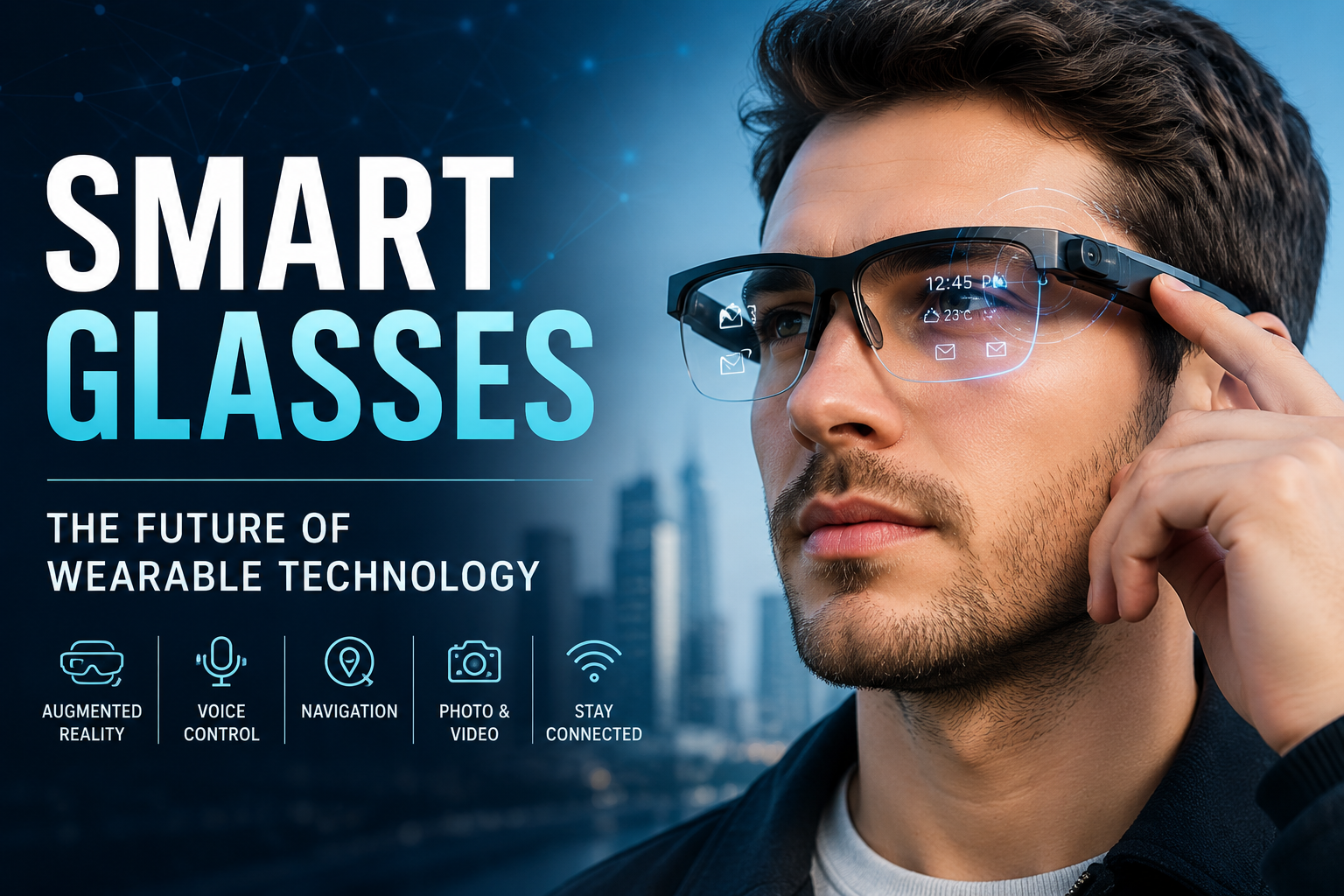
Technology continues to reshape the way we interact with the world, and wearable devices have become an important part of modern life. While smart watches and fitness trackers have already gained widespread popularity, another innovative wearable technology is rapidly gaining attention: smart glasses. These advanced devices combine the functionality of traditional eyewear with cutting-edge digital technology, allowing users to access information, communicate, and interact with digital content without using their hands.
Smart glasses represent a significant step toward a more connected and immersive future. By integrating displays, cameras, sensors, microphones, and artificial intelligence into a compact pair of glasses, manufacturers are creating devices that enhance productivity, entertainment, navigation, healthcare, and everyday convenience.
As technology advances, smart glasses are expected to become increasingly common in both professional and personal settings. This article explores what smart glasses are, how they work, their key features, benefits, applications, challenges, and future potential.
What Are Smart Glasses?
Smart glasses are wearable electronic devices that resemble traditional eyeglasses but include advanced digital features. They can display information directly in the user’s field of view, connect to smartphones and the internet, capture photos and videos, provide navigation assistance, and support voice commands.
Unlike conventional glasses that only improve vision or protect the eyes, smart glasses serve as portable computing devices. They allow users to interact with digital information while remaining aware of their physical surroundings.
Depending on the model, smart glasses may use augmented reality (AR), artificial intelligence (AI), voice assistants, and wireless connectivity to provide a seamless user experience.
The Evolution of Smart Glasses
The concept of smart glasses has existed for decades in science fiction, where futuristic characters often wore devices capable of displaying information in real time. Advances in miniaturization, computing power, battery technology, and wireless communication have gradually transformed this vision into reality.
Early smart glasses prototypes were bulky, expensive, and limited in functionality. However, modern versions are significantly more lightweight, stylish, and powerful. Improvements in display technology, sensors, and AI have enabled manufacturers to create devices that are practical for everyday use.
Today, smart glasses are being adopted across industries ranging from healthcare and manufacturing to education and entertainment.
How Smart Glasses Work
Smart glasses rely on a combination of hardware and software technologies.
Key components typically include:
Display Technology
Smart glasses use miniature displays to project information into the user’s field of vision. These displays may appear as small floating screens or overlay digital content onto the real world.
Cameras
Built-in cameras allow users to capture photos, record videos, and support computer vision applications.
Sensors
Various sensors help the device understand its surroundings and user activity. Common sensors include:
- Accelerometers
- Gyroscopes
- GPS modules
- Proximity sensors
- Ambient light sensors
Connectivity
Smart glasses connect to smartphones, cloud services, and other devices through:
- Bluetooth
- Wi-Fi
- Cellular networks
Audio Systems
Integrated speakers and microphones support communication, voice commands, and media playback.
Artificial Intelligence
AI processes voice commands, recognizes objects, translates languages, and provides personalized assistance.
Together, these technologies create an intelligent wearable platform capable of enhancing daily activities.
Key Features of Smart Glasses
Augmented Reality Displays
One of the most exciting features of smart glasses is augmented reality.
AR technology overlays digital information onto the real world. Users can view:
- Directions
- Notifications
- Weather updates
- Instructions
- Interactive content
without looking at a smartphone or computer.
Voice Control
Most smart glasses support voice commands, allowing users to operate the device hands-free.
Users can:
- Send messages
- Make calls
- Search the internet
- Set reminders
- Control smart devices
Voice interaction improves convenience and safety, especially when multitasking.
Photography and Video Recording
Built-in cameras enable users to capture experiences from a first-person perspective.
This feature is useful for:
- Travel
- Content creation
- Training
- Documentation
- Live streaming
Navigation Assistance
Smart glasses can display turn-by-turn directions directly in the user’s field of vision.
This functionality is particularly beneficial for:
- Drivers
- Cyclists
- Pedestrians
- Travelers
Users can navigate without constantly checking a smartphone screen.
Real-Time Notifications
Smart glasses provide instant access to:
- Messages
- Emails
- Calendar reminders
- Social media updates
- Incoming calls
This helps users stay connected while maintaining focus on their surroundings.
Language Translation
Advanced AI-powered smart glasses can translate spoken or written languages in real time.
This capability is valuable for:
- International travelers
- Business professionals
- Students
- Tourists
Language barriers become easier to overcome through instant translation assistance.
Benefits of Smart Glasses
Hands-Free Access to Information
One of the biggest advantages of smart glasses is the ability to access information without holding a device.
Users can receive important updates while:
- Working
- Driving
- Exercising
- Traveling
This improves efficiency and convenience.
Increased Productivity
Professionals can access instructions, documents, and communication tools without interrupting their tasks.
This is especially valuable in industries such as:
- Manufacturing
- Logistics
- Healthcare
- Engineering
Enhanced Learning Experiences
Students and educators can use smart glasses to create interactive and immersive learning environments.
Educational applications include:
- Virtual demonstrations
- Interactive lessons
- Scientific visualization
- Language learning
Improved Safety
Workers in hazardous environments can receive critical information while keeping their hands free and attention focused on their tasks.
Safety benefits include:
- Real-time alerts
- Equipment monitoring
- Hazard detection
- Emergency communication
Better Accessibility
Smart glasses can assist individuals with disabilities through:
- Visual assistance
- Audio guidance
- Object recognition
- Text-to-speech functionality
These features promote greater independence and accessibility.
Smart Glasses in Healthcare
Healthcare is one of the industries benefiting most from smart glasses technology.
Medical professionals use smart glasses for:
Surgical Assistance
Surgeons can access patient information and imaging data during procedures without looking away from the operating field.
Remote Consultation
Specialists can provide guidance to healthcare workers in remote locations through live video feeds.
Medical Training
Students can observe procedures from a first-person perspective, improving learning opportunities.
Patient Care
Healthcare workers can access records and instructions while treating patients, increasing efficiency and reducing errors.
Smart Glasses in Education
Education is becoming more interactive through smart glasses.
Applications include:
- Virtual field trips
- Science simulations
- Historical reconstructions
- Interactive training programs
Students can engage with educational content in ways that traditional teaching methods cannot provide.
These immersive experiences often improve understanding and retention of information.
Smart Glasses in Manufacturing
Manufacturing companies use smart glasses to improve productivity and accuracy.
Workers can:
- View assembly instructions
- Access schematics
- Receive safety alerts
- Communicate with supervisors
This reduces training time and minimizes mistakes.
Smart glasses also support quality control by providing real-time guidance during inspections.
Smart Glasses in Retail
Retail businesses are exploring various applications for smart glasses.
Examples include:
- Inventory management
- Customer assistance
- Product information display
- Warehouse navigation
Employees can access information instantly, improving customer service and operational efficiency.
Smart Glasses for Navigation and Travel
Travelers can benefit greatly from smart glasses.
Features include:
- Turn-by-turn directions
- Translation services
- Tourist information
- Transportation updates
Users can explore unfamiliar locations more confidently while keeping their hands free.
The combination of navigation and augmented reality creates a more intuitive travel experience.
Smart Glasses and Entertainment
Entertainment applications continue to drive interest in smart glasses.
Popular uses include:
Gaming
AR-powered games blend digital elements with the real world.
Players can interact with virtual objects while moving through physical environments.
Video Streaming
Users can watch videos on virtual screens displayed within their field of view.
Social Media
Smart glasses enable hands-free content creation and sharing.
This functionality appeals to influencers, vloggers, and digital creators.
Artificial Intelligence and Smart Glasses
Artificial intelligence significantly enhances the capabilities of smart glasses.
AI features include:
- Voice recognition
- Object identification
- Facial recognition
- Personalized recommendations
- Language translation
Machine learning algorithms continuously improve performance by adapting to user behavior and preferences.
As AI advances, smart glasses will become increasingly intelligent and useful.
Privacy and Security Concerns
Despite their benefits, smart glasses raise important privacy issues.
Concerns include:
Camera Usage
Built-in cameras may capture images or videos without the knowledge of others.
Data Collection
Smart glasses collect various forms of personal information, including:
- Location data
- Usage patterns
- Audio recordings
- Visual information
Cybersecurity Risks
Connected devices can be vulnerable to hacking if proper security measures are not implemented.
Manufacturers must prioritize privacy protections and data security to build consumer trust.
Challenges Facing Smart Glasses
Battery Life
Compact designs limit battery size, making power management a significant challenge.
Cost
Advanced smart glasses often carry high price tags, limiting accessibility for some consumers.
Comfort
Manufacturers must balance functionality with comfort and aesthetics.
Social Acceptance
Some users may feel uncomfortable wearing highly visible technology in public settings.
Addressing these challenges will be crucial for widespread adoption.
Future Trends in Smart Glasses
The future of smart glasses looks extremely promising.
Several emerging trends are expected to shape the industry.
Better Augmented Reality
Future AR displays will provide:
- Higher resolution
- Wider viewing angles
- More realistic digital overlays
Improved Artificial Intelligence
AI assistants will become more capable of understanding context and user intent.
Longer Battery Life
Advances in battery technology will allow smart glasses to operate for extended periods.
Smaller and Lighter Designs
Future devices will become nearly indistinguishable from ordinary eyewear.
Enhanced Connectivity
Faster wireless networks will improve cloud computing, real-time collaboration, and data streaming.
Health Monitoring Features
Future smart glasses may include sensors capable of monitoring:
- Eye health
- Fatigue levels
- Stress indicators
- Vital signs
These capabilities could expand their role in healthcare and wellness.
Smart Glasses and the Future of Computing
Many experts believe smart glasses could eventually replace smartphones for certain tasks.
Instead of looking down at a handheld device, users could interact with digital information directly within their field of view.
Potential future applications include:
- Virtual workspaces
- Holographic communication
- Real-time collaboration
- Context-aware computing
As technology matures, smart glasses may become a central part of daily digital life.
Conclusion
Smart glasses represent one of the most exciting developments in wearable technology. By combining augmented reality, artificial intelligence, connectivity, and advanced sensors, these devices offer powerful new ways to interact with information and the world around us.
From healthcare and education to manufacturing, retail, and entertainment, smart glasses are transforming industries and creating opportunities for innovation. Although challenges such as battery life, privacy concerns, and cost remain, ongoing technological advancements are steadily addressing these limitations.
As smart glasses become more sophisticated, affordable, and user-friendly, they are likely to play an increasingly important role in everyday life. The future promises a world where digital information seamlessly integrates with our physical environment, enhancing productivity, communication, learning, and convenience like never before.
Smart glasses are not simply the next wearable gadget—they may represent the next major evolution in personal computing and human-computer interaction.