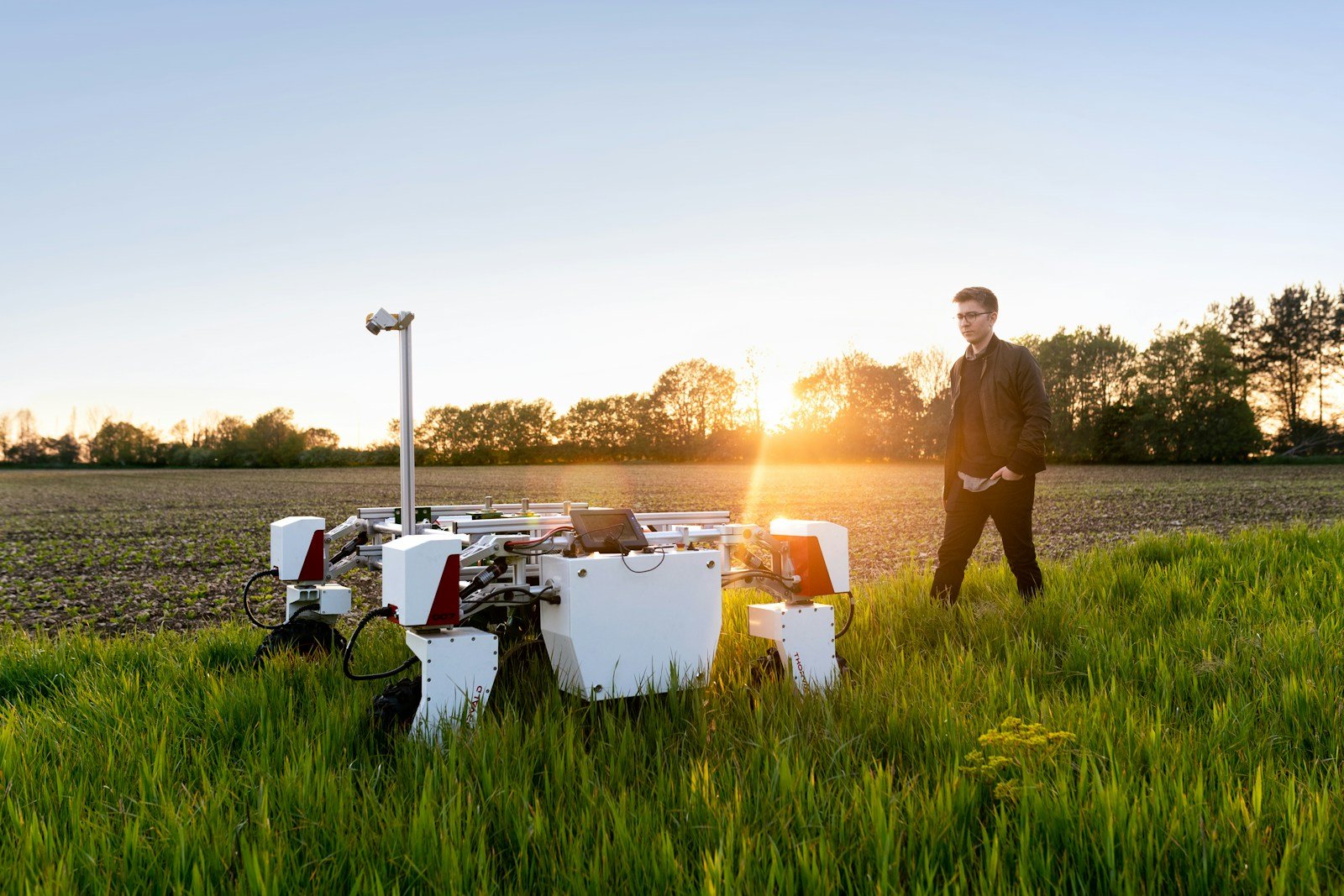
Agriculture has been the backbone of human civilization for thousands of years. From the earliest farming communities to modern agricultural enterprises, farming has played a crucial role in feeding the world’s growing population. However, today’s farmers face numerous challenges, including climate change, water shortages, labor shortages, rising production costs, and the need to increase food production for billions of people.
Fortunately, technology is transforming agriculture at an unprecedented pace. Modern farming is no longer limited to traditional tools and manual labor. Farmers now have access to advanced technologies such as artificial intelligence, drones, GPS systems, smart sensors, robotics, and data analytics. These innovations are helping farmers produce more food, use resources more efficiently, reduce waste, and improve sustainability.
Technology-driven agriculture, often referred to as smart farming or precision agriculture, is reshaping the future of food production. By combining scientific knowledge with digital innovation, farmers can make better decisions and optimize every aspect of their operations.
This article explores how technology is helping farming, the key innovations driving agricultural transformation, and the future of smart agriculture.
The Evolution of Farming Technology
Agricultural technology has evolved dramatically over the centuries. Early farmers relied on simple hand tools and animal power to cultivate crops. The Industrial Revolution introduced mechanized equipment such as tractors and harvesters, significantly increasing productivity.
The digital revolution has brought even greater changes. Computers, satellites, sensors, and artificial intelligence now enable farmers to monitor and manage their farms with remarkable precision. Modern agriculture is becoming increasingly data-driven, allowing farmers to maximize yields while minimizing environmental impact.
Today’s farms often resemble high-tech operations more than traditional agricultural fields, showcasing how innovation is transforming food production worldwide.
Precision Agriculture: Farming with Data
One of the most significant technological advancements in agriculture is precision farming.
Precision agriculture uses data and technology to optimize farming practices. Instead of treating an entire field uniformly, farmers can analyze specific areas and apply resources exactly where needed.
Benefits of precision agriculture include:
- Higher crop yields
- Reduced fertilizer use
- Lower water consumption
- Improved soil health
- Increased profitability
Using GPS technology, sensors, and mapping software, farmers can monitor field conditions in real time and make informed decisions that improve efficiency and sustainability.
GPS Technology in Farming
Global Positioning System (GPS) technology has become an essential tool in modern agriculture.
GPS enables farmers to:
- Navigate fields accurately
- Create detailed field maps
- Guide machinery
- Monitor crop performance
- Reduce overlap during planting and spraying
GPS-guided tractors can operate with incredible precision, reducing fuel consumption and minimizing waste.
This technology allows farmers to plant seeds, apply fertilizers, and harvest crops more efficiently than ever before.
Drones Revolutionizing Agriculture
Drones have become one of the most valuable tools in modern farming.
These unmanned aerial vehicles provide farmers with a bird’s-eye view of their fields.
Agricultural drones are used for:
- Crop monitoring
- Field mapping
- Irrigation assessment
- Pest detection
- Fertilizer application
High-resolution cameras and multispectral sensors allow drones to identify crop stress before it becomes visible to the human eye.
By detecting problems early, farmers can take corrective action and prevent significant yield losses.
Drones also reduce labor requirements and improve operational efficiency.
Artificial Intelligence in Farming
Artificial Intelligence (AI) is transforming agriculture by helping farmers make smarter decisions.
AI systems can analyze vast amounts of agricultural data, including:
- Weather forecasts
- Soil conditions
- Crop health
- Market trends
- Pest activity
Machine learning algorithms identify patterns and generate recommendations that improve farm management.
AI applications include:
Crop Monitoring
AI-powered systems can detect diseases, nutrient deficiencies, and pest infestations.
Yield Prediction
Farmers can estimate crop yields more accurately and plan harvesting activities accordingly.
Resource Optimization
AI helps optimize the use of water, fertilizers, and pesticides.
Automated Decision-Making
Advanced systems can recommend specific actions based on real-time conditions.
As AI technology improves, its role in agriculture continues to expand.
Smart Sensors and the Internet of Things (IoT)
The Internet of Things (IoT) is creating smarter farms through connected devices and sensors.
Smart sensors collect real-time data on:
- Soil moisture
- Temperature
- Humidity
- Nutrient levels
- Weather conditions
This information is transmitted to farmers through mobile apps and management platforms.
Benefits include:
- Better irrigation decisions
- Improved crop health
- Reduced resource waste
- Increased efficiency
IoT technology allows farmers to monitor their fields remotely and respond quickly to changing conditions.
Smart Irrigation Systems
Water management is one of agriculture’s biggest challenges.
Traditional irrigation methods often waste significant amounts of water.
Smart irrigation systems use:
- Soil moisture sensors
- Weather data
- Automated controls
to deliver water precisely when and where it is needed.
Advantages include:
- Water conservation
- Lower operating costs
- Healthier crops
- Reduced environmental impact
Smart irrigation technology is particularly valuable in regions experiencing water scarcity.
Agricultural Robotics
Robots are becoming increasingly common in agriculture.
Agricultural robots perform tasks such as:
- Planting
- Weeding
- Harvesting
- Sorting produce
- Monitoring crops
Robotic systems offer several advantages:
- Reduced labor costs
- Increased efficiency
- Improved accuracy
- Continuous operation
As labor shortages affect agricultural industries worldwide, robotic solutions are becoming increasingly important.
Future farms may rely heavily on autonomous machines capable of performing complex agricultural tasks with minimal human intervention.
Automated Tractors and Machinery
Modern tractors are far more advanced than their predecessors.
Today’s agricultural machinery features:
- GPS guidance
- Autonomous operation
- Real-time monitoring
- Precision controls
Automated tractors can perform field operations with remarkable accuracy, reducing human error and improving productivity.
These technologies help farmers save time, fuel, and resources while increasing overall efficiency.
Big Data in Agriculture
Modern farming generates enormous amounts of information.
Big data technologies help farmers analyze:
- Crop performance
- Weather patterns
- Soil conditions
- Market prices
- Equipment performance
By identifying trends and patterns, farmers can make better decisions regarding planting, irrigation, fertilization, and harvesting.
Data-driven agriculture allows producers to optimize operations and increase profitability.
Satellite Technology and Farming
Satellites provide valuable information that supports agricultural decision-making.
Satellite imagery helps farmers monitor:
- Crop growth
- Soil moisture
- Plant health
- Weather conditions
- Land use changes
These observations allow farmers to identify issues quickly and manage fields more effectively.
Satellite technology is especially useful for large-scale agricultural operations covering vast areas.
Technology in Pest and Disease Management
Crop pests and diseases can significantly reduce agricultural productivity.
Technology helps farmers combat these threats through:
Early Detection
Sensors, drones, and AI systems can identify signs of disease before outbreaks spread.
Precision Application
Farmers can target affected areas rather than treating entire fields.
Predictive Analytics
AI models forecast pest outbreaks based on environmental conditions.
These innovations reduce chemical use and improve crop protection strategies.
Biotechnology and Modern Farming
Biotechnology has become an important component of agricultural innovation.
Scientists use biotechnology to develop crops with desirable traits such as:
- Disease resistance
- Drought tolerance
- Improved nutrition
- Higher yields
These advancements help farmers produce more food while using fewer resources.
Biotechnology also supports sustainable farming practices and enhances food security.
Vertical Farming and Urban Agriculture
Technology is enabling food production in urban environments through vertical farming.
Vertical farms grow crops indoors using:
- LED lighting
- Hydroponic systems
- Climate controls
- Automated monitoring
Benefits include:
- Year-round production
- Reduced land requirements
- Lower water usage
- Shorter transportation distances
As urban populations continue growing, vertical farming may play an increasingly important role in food production.
Hydroponics and Aquaponics
Traditional farming relies heavily on soil, but modern technologies offer alternative growing methods.
Hydroponics
Hydroponic systems grow plants in nutrient-rich water rather than soil.
Advantages include:
- Faster growth
- Reduced water usage
- Controlled environments
- Higher productivity
Aquaponics
Aquaponics combines fish farming with hydroponic plant production.
This integrated system creates a sustainable ecosystem where fish waste provides nutrients for plants.
These technologies are becoming popular in both commercial agriculture and home gardening.
Climate Monitoring and Weather Forecasting
Weather conditions greatly influence agricultural success.
Advanced weather technologies help farmers:
- Predict rainfall
- Monitor temperature changes
- Prepare for storms
- Plan field activities
Accurate forecasts allow farmers to make proactive decisions that protect crops and improve productivity.
Climate monitoring tools are becoming increasingly important as weather patterns become more unpredictable.
Mobile Apps for Farmers
Smartphones have become valuable farming tools.
Agricultural mobile apps provide access to:
- Weather forecasts
- Market prices
- Crop management tools
- Pest identification
- Farm records
Farmers can access critical information anytime and anywhere.
These digital tools improve communication, decision-making, and operational efficiency.
Technology and Livestock Farming
Technology is transforming livestock management as well.
Modern systems monitor:
- Animal health
- Feeding patterns
- Reproduction
- Movement
- Environmental conditions
Wearable sensors track livestock behavior and alert farmers to potential health issues.
Benefits include:
- Improved animal welfare
- Increased productivity
- Reduced disease risks
- Better farm management
Livestock technology helps farmers maintain healthier and more productive herds.
Blockchain in Agriculture
Blockchain technology is improving transparency within agricultural supply chains.
Blockchain systems record information about:
- Product origins
- Production methods
- Transportation
- Quality control
This improves traceability and helps consumers verify food safety and authenticity.
Farmers also benefit from more efficient transactions and improved supply chain management.
Sustainability Through Technology
One of the greatest benefits of agricultural technology is sustainability.
Modern farming technologies help reduce:
- Water waste
- Fertilizer overuse
- Chemical runoff
- Fuel consumption
- Environmental impact
Sustainable agriculture is essential for preserving natural resources and ensuring long-term food production.
Technology enables farmers to balance productivity with environmental responsibility.
Challenges of Agricultural Technology
Despite its advantages, agricultural technology faces several challenges.
These include:
High Initial Costs
Advanced equipment and systems can require significant investment.
Technical Knowledge Requirements
Farmers must learn how to use and maintain new technologies.
Connectivity Issues
Rural areas may lack reliable internet access.
Data Security Concerns
Protecting agricultural data is becoming increasingly important.
Addressing these challenges will be crucial for widespread adoption.
The Future of Smart Farming
The future of agriculture is increasingly technology-driven.
Emerging innovations include:
Autonomous Farms
Fully automated farms may operate with minimal human intervention.
Advanced Artificial Intelligence
AI systems will become more accurate and capable of managing complex agricultural tasks.
Swarm Robotics
Groups of coordinated robots may handle planting, monitoring, and harvesting activities.
Gene Editing Technologies
Advanced genetic techniques may produce crops with enhanced resilience and productivity.
Climate-Adaptive Agriculture
Future technologies will help farmers adapt to changing environmental conditions.
These innovations will play a critical role in feeding a growing global population.
Why Technology Matters for Agriculture
The world’s population continues to grow, increasing demand for food production.
At the same time, agriculture faces challenges such as:
- Climate change
- Resource limitations
- Labor shortages
- Environmental concerns
Technology provides solutions that help farmers overcome these obstacles.
By improving efficiency, sustainability, and productivity, technological innovation supports global food security and economic development.
Without continued advancements in agricultural technology, meeting future food demands would become increasingly difficult.
Conclusion
Technology is transforming farming in remarkable ways. From artificial intelligence and drones to smart sensors and automated machinery, modern innovations are helping farmers produce more food while using fewer resources. These technologies improve efficiency, reduce waste, enhance sustainability, and support better decision-making across every stage of agricultural production.
As the global population continues to grow and environmental challenges become more complex, technology will play an increasingly important role in ensuring food security. Smart farming solutions are helping agriculture evolve from traditional practices into a highly advanced, data-driven industry capable of meeting the needs of future generations.
The future of farming lies in innovation, and technology is leading the way toward a more productive, sustainable, and resilient agricultural system for the world.