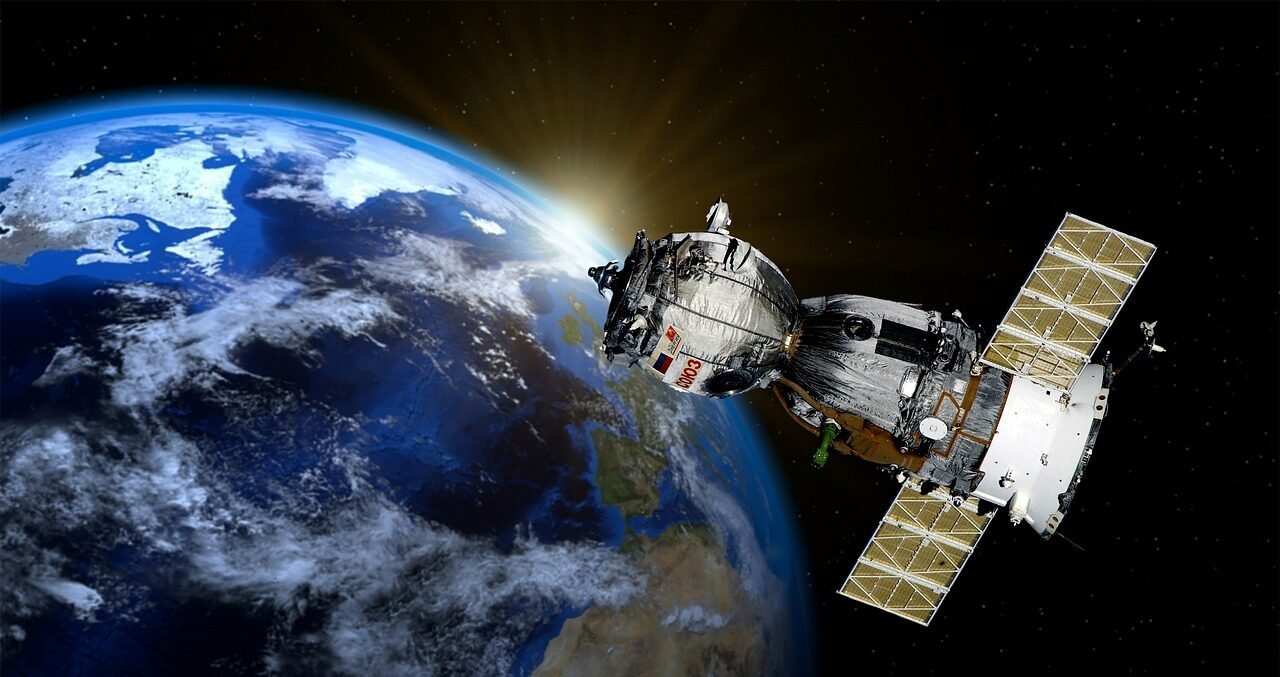
Space exploration has always captured the imagination of humanity. For centuries, people looked at the stars and wondered what lay beyond our planet. Today, thanks to rapid technological advancements, those mysteries are gradually being uncovered. Technology has become the driving force behind modern space exploration, enabling scientists and engineers to travel farther, gather more data, and better understand the universe than ever before.
From powerful rockets and intelligent spacecraft to artificial intelligence and advanced communication systems, technology is revolutionizing the way we explore space. Missions that once seemed impossible are now becoming reality. Humans have landed on the Moon, robots have explored Mars, and telescopes have revealed distant galaxies billions of light-years away.
As nations and private companies continue investing in space programs, technology remains at the heart of every discovery. This article explores how technology is helping humanity explore space, the innovations making it possible, and what the future of space exploration may hold.
The Evolution of Space Exploration Technology
The journey of space exploration began in the mid-20th century with relatively simple technology compared to today’s standards. Early rockets had limited computing power and basic navigation systems. Yet these innovations laid the foundation for future advancements.
Over the decades, improvements in computing, materials science, robotics, and telecommunications have transformed space missions. Modern spacecraft are equipped with sophisticated sensors, autonomous systems, and advanced propulsion technologies that allow them to travel vast distances and perform complex tasks.
Technology has enabled space agencies and private companies to reduce costs, increase mission reliability, and achieve goals that were once considered science fiction.
Advanced Rocket Technology
The Gateway to Space
Rockets are the backbone of space exploration. Without them, satellites, spacecraft, and astronauts could never leave Earth.
Modern rocket technology has improved significantly through:
- More powerful engines
- Lightweight materials
- Better fuel efficiency
- Enhanced safety systems
- Reusable launch vehicles
One of the biggest breakthroughs has been the development of reusable rockets. Traditionally, rockets were discarded after a single launch, making space missions extremely expensive. Today, reusable rocket technology allows portions of launch vehicles to return safely to Earth and be used again.
This innovation dramatically reduces launch costs and increases the frequency of missions, making space exploration more accessible than ever.
Artificial Intelligence in Space Exploration
Artificial Intelligence (AI) is playing an increasingly important role in space missions. Spacecraft operating millions of kilometers from Earth cannot always wait for human instructions due to communication delays.
AI enables spacecraft and robotic systems to:
- Make decisions independently
- Analyze data in real time
- Detect anomalies
- Navigate challenging environments
- Optimize mission performance
For example, AI can help Mars rovers identify scientifically valuable rocks and choose the most efficient routes across difficult terrain.
Machine learning algorithms also process enormous amounts of data collected from telescopes and satellites, helping scientists identify patterns and make discoveries more quickly.
Robotics and Space Exploration
Exploring Dangerous Environments
Robots have become indispensable tools in space exploration. They can operate in environments too dangerous for humans and remain active for years without direct human presence.
Robotic technologies include:
- Planetary rovers
- Robotic arms
- Autonomous drones
- Space station maintenance robots
- Deep-space probes
Mars rovers have transformed our understanding of the Red Planet by collecting samples, taking photographs, and conducting scientific experiments.
These robotic explorers can survive harsh temperatures, dust storms, and radiation levels that would be extremely challenging for human explorers.
Space Telescopes and Observation Technology
One of the most important contributions of technology to space exploration is the development of advanced telescopes.
Seeing Farther into the Universe
Modern space telescopes allow scientists to observe:
- Distant galaxies
- Black holes
- Exoplanets
- Nebulae
- Cosmic phenomena
Unlike ground-based telescopes, space telescopes operate above Earth’s atmosphere, providing clearer and more detailed images.
Advanced imaging systems can detect light from objects billions of light-years away, allowing researchers to study the early universe and understand how galaxies formed.
These observations continue to reshape our understanding of space and the origins of the cosmos.
Satellite Technology
Satellites play a critical role in both space exploration and life on Earth.
They assist with:
- Communication
- Navigation
- Weather forecasting
- Scientific research
- Earth observation
Space exploration missions rely heavily on satellites to relay information between spacecraft and mission control centers.
Modern satellites use sophisticated sensors and communication systems to transmit large volumes of data across vast distances with remarkable accuracy.
As satellite technology advances, researchers can gather increasingly detailed information about planets, stars, and cosmic events.
Advanced Communication Systems
Communication is essential for successful space missions. Spacecraft often operate millions or even billions of kilometers away from Earth.
Technological advancements have improved:
- Signal reliability
- Data transmission speeds
- Deep-space communication
- Satellite networks
Modern communication systems enable scientists to receive high-resolution images, scientific measurements, and status updates from distant spacecraft.
Future technologies such as laser-based communication systems could dramatically increase data transmission rates, making deep-space missions even more effective.
Navigation and Guidance Systems
Accurate navigation is critical in space exploration. Spacecraft must travel enormous distances while maintaining precise trajectories.
Advanced navigation technologies include:
- GPS-like systems
- Star trackers
- Inertial navigation systems
- Autonomous guidance software
These systems help spacecraft:
- Reach intended destinations
- Avoid hazards
- Conduct orbital maneuvers
- Land safely on planetary surfaces
Without advanced navigation technology, modern space missions would be impossible.
Miniaturization of Technology
One of the most significant technological trends in recent years is miniaturization.
Smaller and more powerful components allow engineers to build compact spacecraft that are:
- Less expensive
- More efficient
- Easier to launch
Miniaturized sensors, processors, and communication systems have led to the development of small satellites known as CubeSats.
These affordable spacecraft allow universities, research institutions, and smaller organizations to participate in space exploration projects that were once reserved for major space agencies.
Advanced Materials and Engineering
Space is an extremely hostile environment. Spacecraft must withstand:
- Extreme temperatures
- Radiation
- Vacuum conditions
- Micrometeoroid impacts
To address these challenges, engineers use advanced materials such as:
- Carbon composites
- Heat-resistant alloys
- Radiation-shielding materials
- Lightweight structural components
These materials improve spacecraft durability while reducing overall weight, making missions more efficient and cost-effective.
Innovative engineering solutions continue to push the boundaries of what is possible in space exploration.
Exploring Mars with Technology
Mars remains one of humanity’s most exciting exploration targets.
Technology has enabled missions that:
- Map the planet’s surface
- Analyze soil composition
- Search for signs of past water
- Investigate habitability
Advanced rovers equipped with cameras, drills, and scientific instruments provide valuable insights into Mars’ history and geology.
Future technologies may support human missions to Mars by enabling:
- Resource extraction
- Habitat construction
- Food production
- Life-support systems
These developments could eventually make long-term human presence on Mars possible.
The Role of Drones in Space Exploration
Drone technology is extending beyond Earth and into planetary exploration.
Planetary drones can:
- Survey difficult terrain
- Capture aerial imagery
- Reach inaccessible areas
- Assist rover missions
Aerial exploration provides scientists with perspectives that ground-based vehicles cannot achieve.
Future missions may deploy fleets of autonomous drones to explore planets, moons, and asteroids in greater detail.
Space Exploration and Big Data
Modern space missions generate enormous amounts of data.
Sources include:
- Telescopes
- Satellites
- Space probes
- Planetary rovers
Managing and analyzing this information requires advanced computing systems.
Big data technologies help scientists:
- Process observations
- Identify trends
- Detect anomalies
- Make predictions
Without powerful data analytics tools, many scientific discoveries would remain hidden within massive datasets.
3D Printing in Space
3D printing technology is becoming increasingly important for future space missions.
Benefits include:
- Manufacturing tools on demand
- Producing spare parts
- Reducing cargo requirements
- Supporting long-duration missions
Instead of transporting every needed component from Earth, astronauts may eventually manufacture equipment directly in space.
This capability could be crucial for future lunar bases and Mars colonies.
Human Spaceflight Technology
Technology has dramatically improved human spaceflight.
Modern systems provide:
- Enhanced safety
- Better life support
- Improved spacecraft reliability
- Advanced medical monitoring
Space suits have also evolved significantly, offering greater mobility, protection, and functionality.
Future innovations may make long-duration missions safer and more comfortable, allowing humans to travel deeper into space than ever before.
Searching for Life Beyond Earth
One of the greatest goals of space exploration is discovering whether life exists elsewhere in the universe.
Technology helps scientists search for life through:
- Planet detection systems
- Atmospheric analysis
- Chemical sensors
- Biological experiments
Advanced telescopes can identify planets orbiting distant stars and analyze their atmospheres for signs of habitability.
Future technologies may eventually provide evidence of microbial life or even intelligent civilizations beyond Earth.
Private Companies Driving Innovation
Private aerospace companies have become major contributors to space exploration.
Their technological innovations include:
- Reusable rockets
- Advanced spacecraft
- Satellite deployment systems
- Space tourism platforms
Competition and private investment are accelerating technological development and reducing the costs associated with space missions.
As more organizations enter the space industry, innovation is expected to increase even further.
Challenges Technology Helps Overcome
Space exploration presents numerous challenges, including:
- Distance
- Radiation exposure
- Equipment reliability
- Resource limitations
- Communication delays
Technology provides solutions through:
- Autonomous systems
- Radiation protection
- Advanced propulsion
- Remote operations
- Artificial intelligence
These innovations allow missions to succeed in environments where human intervention is limited or impossible.
Future Technologies in Space Exploration
The future of space exploration is filled with exciting possibilities.
Emerging technologies include:
Nuclear Propulsion
Advanced propulsion systems may significantly reduce travel times to distant planets.
Quantum Communication
Quantum technologies could revolutionize secure communication across vast distances.
Autonomous Spacecraft
Future spacecraft may operate independently for years without direct human control.
Space-Based Manufacturing
Factories in orbit could produce materials and equipment more efficiently than on Earth.
Lunar and Martian Habitats
Advanced construction technologies may enable permanent settlements beyond Earth.
Asteroid Mining
Future missions could extract valuable resources from asteroids, supporting economic growth in space.
The Importance of Technology for Humanity’s Future
Space exploration is not only about discovering distant worlds. Many technologies developed for space missions benefit life on Earth.
Examples include:
- Medical imaging systems
- Water purification technologies
- Satellite communications
- Weather forecasting
- Advanced materials
Investments in space technology often lead to innovations that improve daily life and drive economic growth.
Furthermore, exploring space helps humanity prepare for future challenges and ensures the long-term survival of our species.
Conclusion
Technology is the foundation of modern space exploration. From powerful rockets and intelligent robots to artificial intelligence and advanced telescopes, technological innovations have transformed humanity’s ability to explore the cosmos.
Every breakthrough brings us closer to understanding our universe and our place within it. Technology allows us to travel farther, gather more information, and overcome challenges that once seemed insurmountable. As innovation continues, future generations may witness permanent lunar bases, human settlements on Mars, asteroid mining operations, and discoveries that fundamentally change our understanding of life and the universe.
The journey into space is only beginning, and technology will continue to guide humanity toward new horizons, unlocking mysteries that have fascinated us for thousands of years. Through continued investment, research, and innovation, the dream of exploring the stars is becoming an increasingly achievable reality.