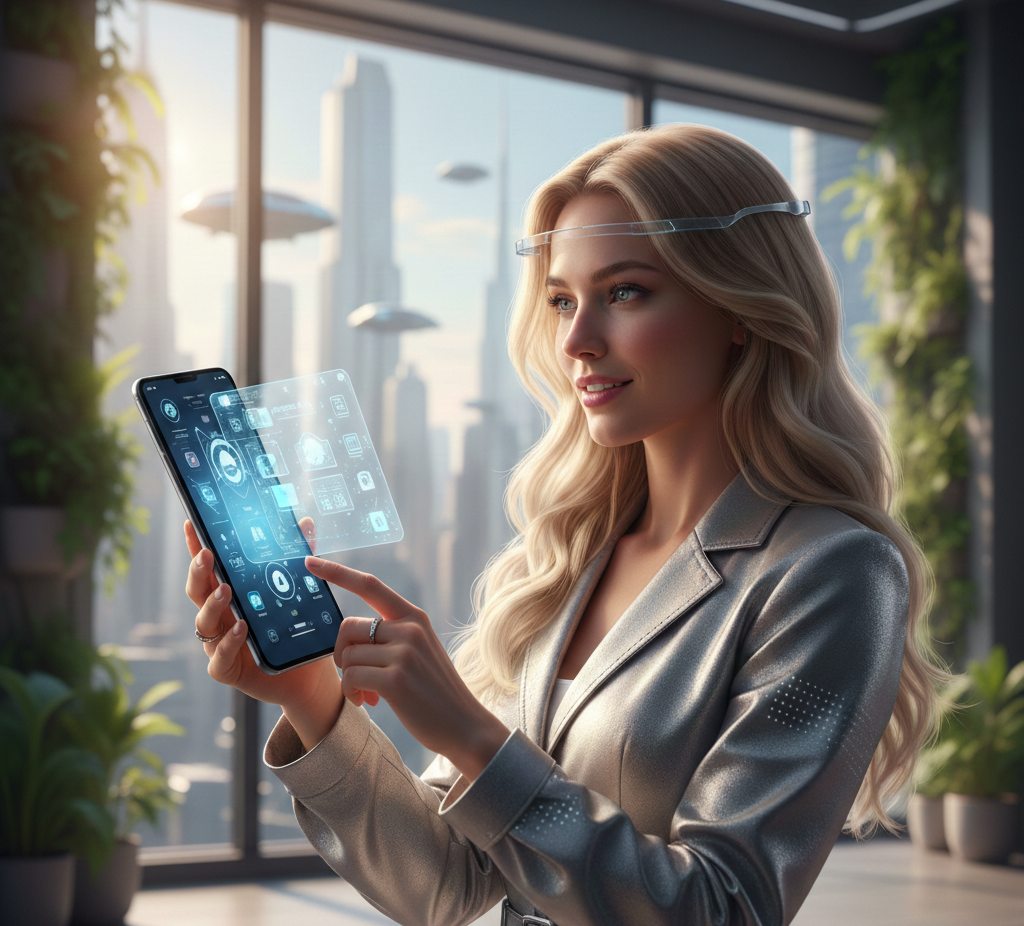
The smartphone is the most successful piece of consumer technology in human history. In just over five decades, it has evolved from a three-pound “brick” that could barely hold a ten-minute call into a sleek, AI-driven glass slab that manages our finances, health, social lives, and careers. But as we stand in 2026, the device in your pocket is undergoing its most radical transformation yet.
The era of the “smartphone” is ending, and the era of the “Intelligent Agent” is beginning. This 2,000-word deep dive explores where we came from, where we are today, and the mind-bending future of mobile technology.
Part I: The Ancestry of the Pocket Titan
To understand where the mobile phone is going, we must appreciate the sheer audacity of its origin.
1. 1973: The “Brick” That Changed Everything
On April 3, 1973, Motorola engineer Martin Cooper stood on a New York City street and made the first public mobile phone call. The device, the Motorola DynaTAC, was massive—weighing 2.5 pounds and standing 10 inches tall. It had no screen, a talk time of just 35 minutes, and required 10 hours to charge. It was a tool for the elite, a luxury symbol of the “Wall Street” era.
2. The 1990s: Digitalization and the SMS Revolution
The shift from analog (1G) to digital (2G) in the early 90s brought two world-changing innovations: GSM standards and SMS (Short Message Service).
- The Nokia Era: Phones like the Nokia 1011 and 3310 moved mobile tech from “car phones” to “pocket phones.”
- Texting: The first SMS was sent in 1992 (“Merry Christmas”). By the late 90s, a new thumb-based language had emerged, forever changing how humans communicate.
3. 2007: The “Jesus Phone” Moment
When Steve Jobs pulled the first iPhone from his pocket in 2007, he famously described it as three devices in one: a wide-screen iPod with touch controls, a revolutionary mobile phone, and a breakthrough internet communications device.
- The App Store (2008): This was the true turning point. Suddenly, the hardware was just a vessel for software. The phone became a camera, a map, a game console, and a bank.
Part II: Today (2026) – The Rise of Physical AI
As of 2026, we have reached “Peak Slab.” For years, smartphone upgrades were incremental: slightly better cameras, slightly faster chips. But this year, the industry has hit a massive inflection point.
1. Generative AI is the New Operating System
In 2026, your phone doesn’t just run apps; it runs an Agentic AI.
- Proactive Assistance: Modern devices use “Vision-Language-Action” (VLA) models. If you take a photo of a flyer for a concert, your phone doesn’t just save the image—it automatically checks your calendar, finds your friends who like that artist, and drafts a group text.
- On-Device Processing: Gone are the days of sending every request to a cloud server. The latest silicon (like the Snapdragon 8 Gen 5) allows 10-billion-parameter AI models to run locally, ensuring your data never leaves the device.
2. The Hardware Renaissance: Tri-Folds and Silicon-Carbon
- Form Factors: We have moved beyond simple foldables. 2026 is the year of the Tri-Fold. Devices like the Huawei Mate XT have paved the way for phones that unfold twice to become full 10.5-inch workstations.
- Battery Breakthroughs: The “Silicon-Carbon” battery has finally gone mainstream. These high-density cells allow for 7,000mAh capacities in phones thinner than an iPhone 13. We are finally seeing “two-day battery life” become a standard, not a marketing myth.
Part III: The Future (2030 and Beyond)
What happens when the screen disappears? The next decade of mobile technology will be defined by de-materialization.
1. 6G: The Network of Senses
By 2030, 6G networks will begin to roll out. While 5G was about speed, 6G is about sensing and presence.
- Terahertz Frequencies: 6G will allow for data speeds up to 1 Terabit per second (50x faster than 5G).
- Holographic Communication: 6G’s ultra-low latency will enable high-fidelity 3D holographic calls. Instead of a flat Zoom screen, your caller will appear as a 3D projection in your room.
2. The “Invisible” Phone: Ambient Computing
Many futurists predict that by the mid-2030s, the “phone” will no longer be a primary device.
- The Hub Concept: The “phone” becomes a small, screenless puck in your pocket that provides processing power.
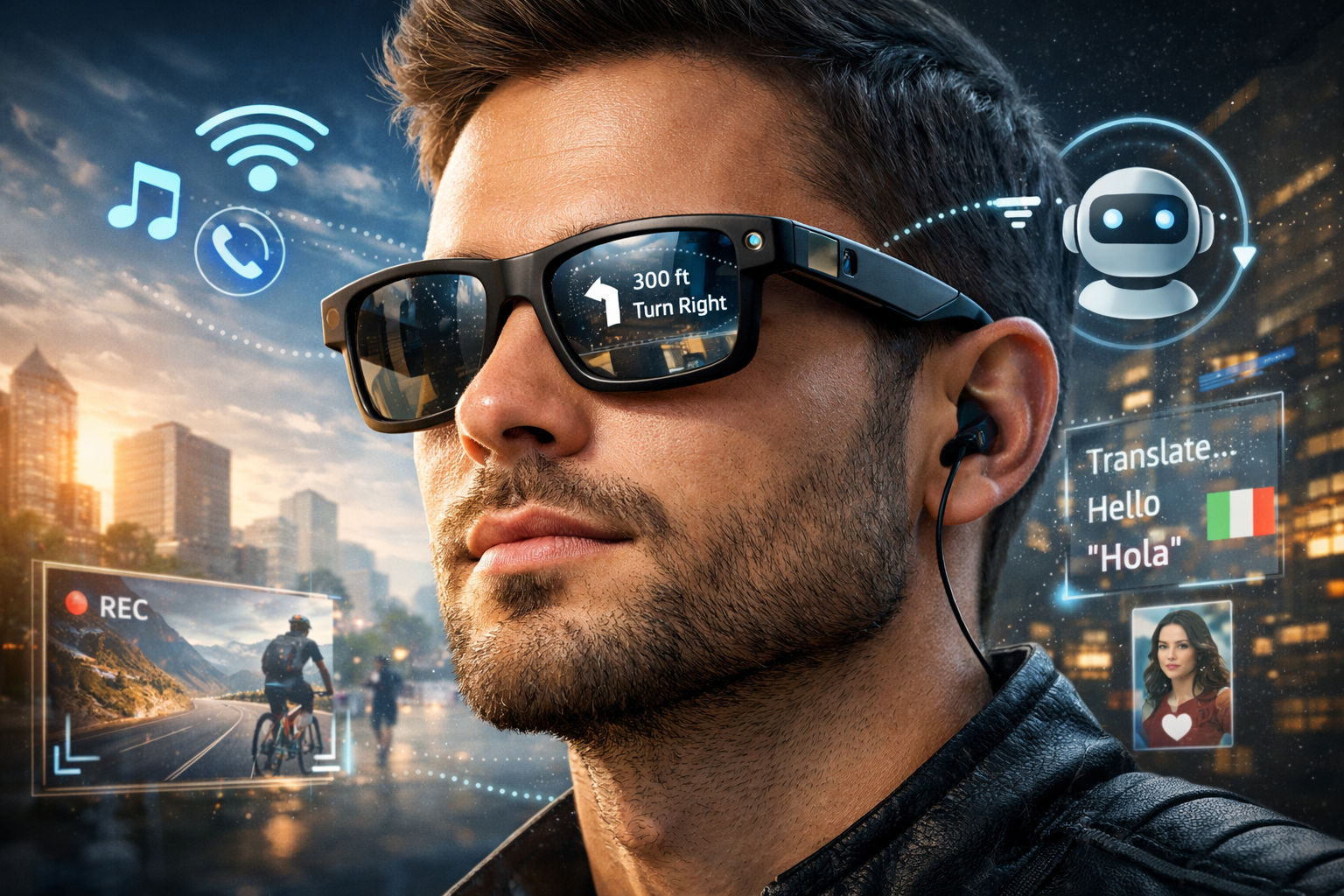
- AR Glasses: Your interface moves to lightweight Augmented Reality (AR) glasses. Digital information—maps, notifications, and videos—will be overlaid directly onto your physical world.
- Neural Interfaces: Companies like Neuralink are already testing brain-computer interfaces (BCIs). In the distant future, the “mobile phone” might simply be a chip that allows you to “think” a text message or “stream” music directly into your auditory cortex.
3. Sustainability: The Circular Phone
The future of phones isn’t just about “new”; it’s about “forever.”
- Modular Hardware: Imagine a phone where you can swap out the camera module like a Lego piece as tech improves, rather than buying a new $1,200 device every two years.
- Bio-Materials: Future chassis will be made from self-healing polymers and bio-based textiles that can be safely composted at the end of their life cycle.
Part IV: The Societal Impact
The evolution of the phone isn’t just a tech story—it’s a human story.
| Era | Focus | Human Impact |
| 1980s | Mobility | Freedom from the desk. |
| 2000s | Connectivity | The world in your pocket. |
| 2020s | Intelligence | The phone as a second brain. |
| 2030s+ | Integration | Technology becomes invisible. |
The Challenges Ahead
- The Privacy Paradox: As phones become “Intelligent Agents” that know our heartbeat, our location, and our moods, the risk of data misuse reaches an all-time high.
- Digital Well-being: We are already seeing a “dumb phone” movement—people reverting to basic devices to reclaim their attention span. The future phone must solve the problem of notification fatigue.
Conclusion: The Device That Became Us
The future of the mobile phone is a paradox: it will become more powerful than we can imagine, yet more invisible than ever before. We are moving away from a world where we “stare at screens” and toward a world where technology is a seamless layer over our reality.
From the three-pound brick of 1973 to the holographic, AI-driven companions of 2030, the mobile phone remains the ultimate testament to human ingenuity. It has shrunk the world, and in doing so, it has expanded our potential




Leave a Reply