
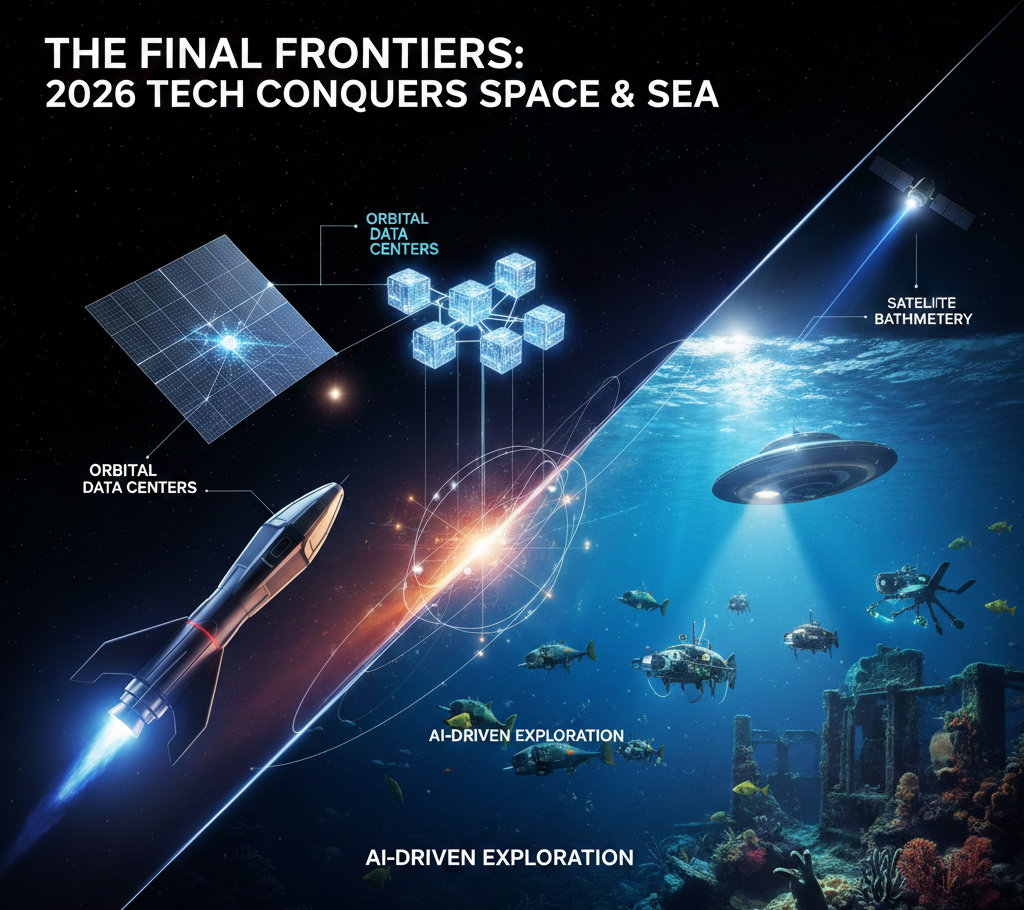
Humanity has always been driven by curiosity. For centuries, we looked up at the stars and out across the vast oceans with wonder, imagining what lay beyond our reach. Today, thanks to rapid technological advancements, we are no longer limited to imagination. Modern innovations in robotics, artificial intelligence, satellite systems, sensors, and advanced materials are enabling us to explore both outer space and the deep ocean in ways that were once impossible.
Although space and the oceans are vastly different environments, they share many similarities. Both are extreme, hostile, and largely unexplored. Both require specialized equipment to survive. And both hold answers to fundamental questions about life, climate, resources, and the future of humanity.
In this comprehensive article, we explore how today’s cutting-edge technology is revolutionizing our ability to explore space and oceans — pushing the boundaries of discovery further than ever before.
The New Space Age: Technology Powering Cosmic Exploration
Space exploration has evolved dramatically over the past two decades. What was once limited to government-led missions is now a global effort involving private companies, international collaborations, and AI-driven automation.
Advanced Space Telescopes
One of the most significant breakthroughs in space exploration has been the development of powerful space telescopes like the James Webb Space Telescope.

Unlike earlier telescopes, Webb observes the universe in infrared wavelengths, allowing scientists to:
- See through cosmic dust clouds
- Study the formation of early galaxies
- Analyze atmospheres of exoplanets
- Search for chemical signatures related to life
Modern telescopes use ultra-sensitive sensors, deployable mirrors, and AI-based image processing to provide unprecedented clarity and depth.
These technologies allow us to look billions of years into the past, essentially observing the early stages of the universe.
Reusable Rockets and Commercial Spaceflight
Reusable rocket technology has drastically reduced the cost of launching payloads into orbit. Companies like SpaceX have pioneered rocket boosters that land vertically and can be reused multiple times.
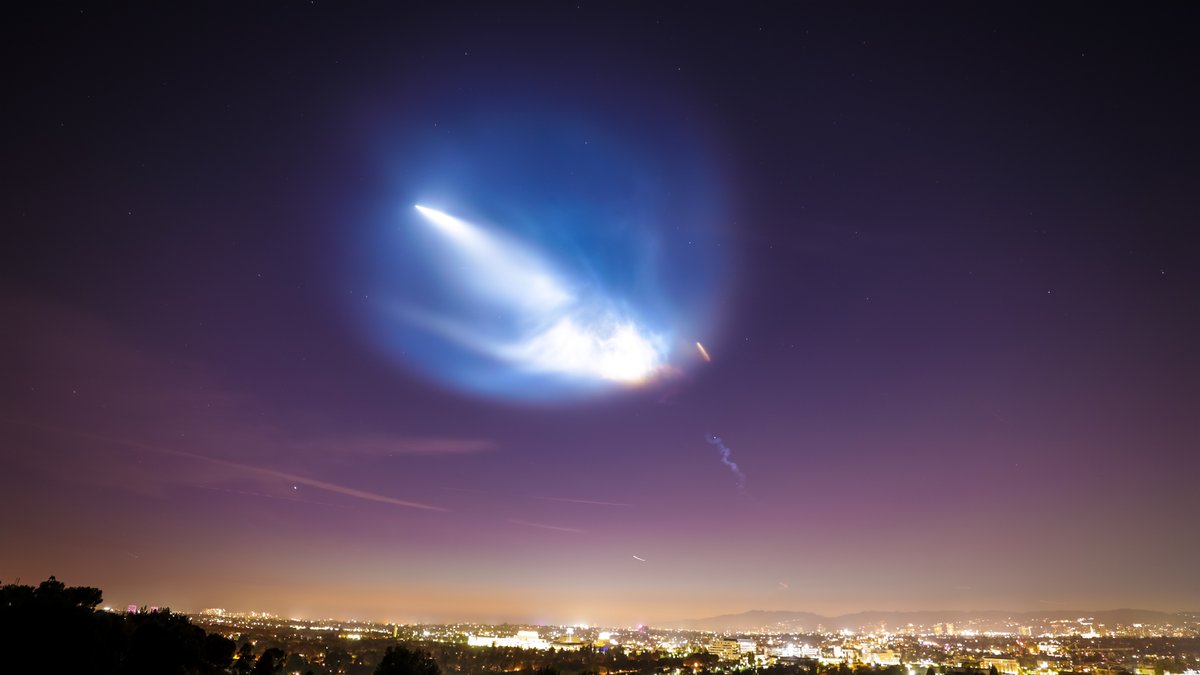
Key technological advances include:
- Autonomous landing systems
- Precision guidance and navigation
- Advanced composite materials
- Efficient propulsion systems
Reusable rockets lower launch costs, making satellite deployment, scientific missions, and even space tourism more accessible.
This cost reduction accelerates research in satellite imaging, Earth observation, planetary science, and communications infrastructure.
Mars Exploration and Robotic Rovers
Robotic explorers have become increasingly intelligent and autonomous. NASA’s Perseverance Rover represents the latest leap in robotic planetary exploration.

Perseverance features:
- AI-based navigation systems
- Autonomous hazard avoidance
- Advanced drilling and sampling tools
- Onboard laboratories for chemical analysis
It is even accompanied by Ingenuity, a small helicopter that demonstrated powered flight on another planet — a historic milestone.
These technologies allow rovers to make independent decisions without waiting for instructions from Earth, which can take up to 20 minutes due to communication delays.
Satellite Networks and Earth Observation
Modern satellite constellations provide high-resolution imagery, climate data, and real-time monitoring of Earth systems.
Satellites now track:
- Deforestation
- Ocean temperatures
- Ice sheet melting
- Storm formation
- Air pollution
Advanced sensors and machine learning algorithms process massive amounts of satellite data, enabling scientists to detect patterns and predict environmental changes with remarkable accuracy.
Artificial Intelligence in Space
AI has become essential in space exploration. It assists with:
- Autonomous spacecraft navigation
- Image analysis from telescopes
- Anomaly detection in spacecraft systems
- Space debris tracking
AI reduces human workload and increases mission efficiency, particularly for long-duration missions where real-time control is impossible.
As space missions extend deeper into the solar system, AI-driven systems will become even more critical.
Ocean Exploration: Unlocking Earth’s Final Frontier
While we have sent spacecraft billions of miles away, more than 80% of Earth’s oceans remain unexplored. The deep sea is one of the most extreme environments on our planet — high pressure, total darkness, and freezing temperatures.
Modern technology is finally allowing us to explore this mysterious world.
Autonomous Underwater Vehicles (AUVs)
Autonomous underwater vehicles operate without human pilots, using sonar, cameras, and AI to map and explore the seafloor.
AUVs can:
- Map underwater terrain
- Study marine ecosystems
- Inspect underwater pipelines
- Explore shipwrecks
- Search for new species
Unlike human divers, AUVs can withstand extreme pressures and remain submerged for long durations.
Remotely Operated Vehicles (ROVs)
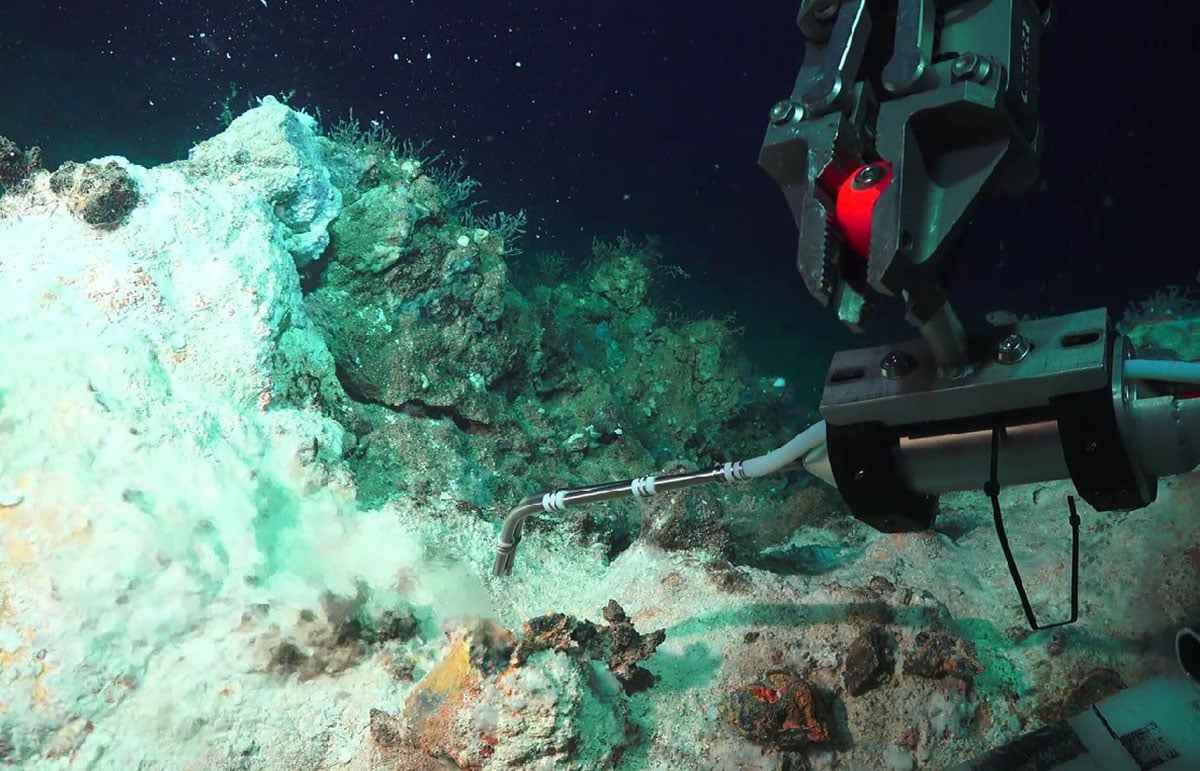
Remotely operated vehicles are tethered robots controlled from ships at the surface. They are equipped with:
- Robotic arms
- High-definition cameras
- Sampling tools
- Environmental sensors
ROVs allow scientists to collect biological and geological samples from deep-sea environments previously unreachable.
Advanced Sonar and Seafloor Mapping
Multibeam sonar systems send sound waves to map ocean floors with incredible precision. These systems help researchers:
- Identify underwater mountains
- Locate tectonic boundaries
- Discover hydrothermal vents
- Chart unknown terrain
High-resolution 3D mapping technologies provide insights into underwater geology and marine habitats.
Deep-Sea Submersibles
Crewed submersibles have also evolved dramatically. The National Oceanic and Atmospheric Administration (NOAA) supports deep-sea missions using advanced submersibles capable of reaching extreme depths.

These vehicles are constructed with:
- Titanium pressure hulls
- Acrylic observation domes
- High-intensity LED lighting
- Scientific instrumentation
Such technology enables direct human observation of deep ecosystems.
AI and Big Data in Ocean Science
Just like in space exploration, AI plays a growing role in ocean research.
AI systems analyze:
- Sonar data
- Marine biodiversity recordings
- Climate patterns
- Ocean current models
Machine learning helps identify new species from underwater footage and predict coral bleaching events.
The ability to process massive oceanographic datasets improves forecasting and conservation strategies.
Shared Technologies Between Space and Ocean Exploration
Although space and ocean environments differ greatly, many technologies overlap:
Robotics
Robotic systems are essential in both domains. Whether on Mars or deep underwater, robots reduce risk to humans.
Advanced Materials
Exploration vehicles require materials that withstand:
- Extreme pressure (deep sea)
- Extreme temperature changes (space)
- Radiation exposure (space)
Lightweight composites and high-strength alloys are key innovations.
Communication Systems
Underwater communication relies on acoustic signals, while space communication uses radio waves. Both require advanced signal processing and error correction technologies.
Remote Sensing
Satellites monitor oceans from space, bridging the gap between both frontiers. Space-based imaging provides critical ocean data such as sea level rise and phytoplankton distribution.
Why Exploration Matters
Exploring space and oceans is not just about curiosity — it has practical benefits:
Climate Understanding
Oceans regulate global climate, while satellites track environmental changes from space.
Resource Discovery
Deep-sea minerals and space resources (like asteroid metals) may play roles in future economies.
Biodiversity Research
Ocean exploration reveals new species and ecosystems that could hold medical breakthroughs.
Search for Life
Mars missions and deep-ocean hydrothermal vent studies both help scientists understand how life might exist in extreme environments.
The Role of International Collaboration
Space and ocean exploration are global efforts. International partnerships accelerate innovation and reduce costs.
Collaboration allows scientists to share:
- Data
- Technology
- Research findings
- Mission resources
Global cooperation ensures that discoveries benefit all of humanity.
The Future of Exploration Technology
Looking ahead, several innovations promise even greater breakthroughs:
Quantum Sensors
Ultra-sensitive sensors could improve gravitational mapping and underwater navigation.
Swarm Robotics
Groups of small robots working together may map entire ocean basins or planetary surfaces.
3D Printing in Space
In-space manufacturing could enable long-duration missions without heavy cargo launches.
Deep-Ocean Habitats
Future underwater stations may allow extended human research missions.
Human Missions to Mars
Advances in propulsion, life-support systems, and radiation shielding bring us closer to crewed missions beyond the Moon.
Conclusion
Technology is reshaping humanity’s relationship with the unknown. From the furthest galaxies observed by advanced telescopes to the darkest trenches of Earth’s oceans, modern innovation is unlocking secrets once hidden from view.
Reusable rockets, AI-powered rovers, underwater drones, sonar mapping systems, and advanced submersibles are not just engineering marvels — they are tools expanding the boundaries of human knowledge.
Both space and the oceans remain largely unexplored. Yet each year, breakthroughs in robotics, artificial intelligence, materials science, and data processing bring us closer to understanding these extreme frontiers.
As technology continues to evolve, so too will our capacity to explore, discover, and perhaps one day inhabit environments far beyond our current limits.
The age of exploration is far from over. In fact, it is just beginning.
Если вам срочно нужен [url=https://evakuatorsochi24.ru]цена эвакуатор[/url], мы готовы помочь круглосуточно и по доступной цене.
Водители эвакуаторов обучены управлять техникой и обеспечивать безопасность.
Лучшие возможности предлагает [url=https://corona-studio.ru/]вебкам[/url], где каждый может найти работу мечты.
Это позволит работать с комфортом и добиваться лучших результатов.
Если вы ищете профессиональную помощь, воспользуйтесь [url=https://youtalk.ru/psiholog-seksolog/]записаться сексолог[/url] с гарантией конфиденциальности и поддержки.
Все больше людей обращаются за помощью к специалистам через интернет.
Если вы хотите подчеркнуть свою уникальность, обратите внимание на [url=https://www.diamondrings01.ru/]кольцо из белого золота с бриллиантом цена[/url] – стильное украшение, которое станет идеальным подарком для особенного человека.
Первоначально важным фактором при покупке кольца с бриллиантом считается качество драгоценного камня.
Для выбора надежного решения рекомендуем ознакомиться с [url=https://media-garage.ru/moya-kollekciya/rejting-sistemnyh-multimedia-integratorov-goroda-moskvy]топ системных интеграторов[/url], где собраны лучшие компании Москвы.
Комбинирование критериев — опыта, технологий и репутации — обеспечивает правильное решение
Если вы хотите [url=https://www.dizaynerskiye-barnyye-stulya.ru/]дизайнерские барные стулья купить[/url], наш магазин предлагает широкий выбор стильных и качественных моделей.
Качество и надежность – это то, что отличает дизайнерские барные стулья на рынке.