
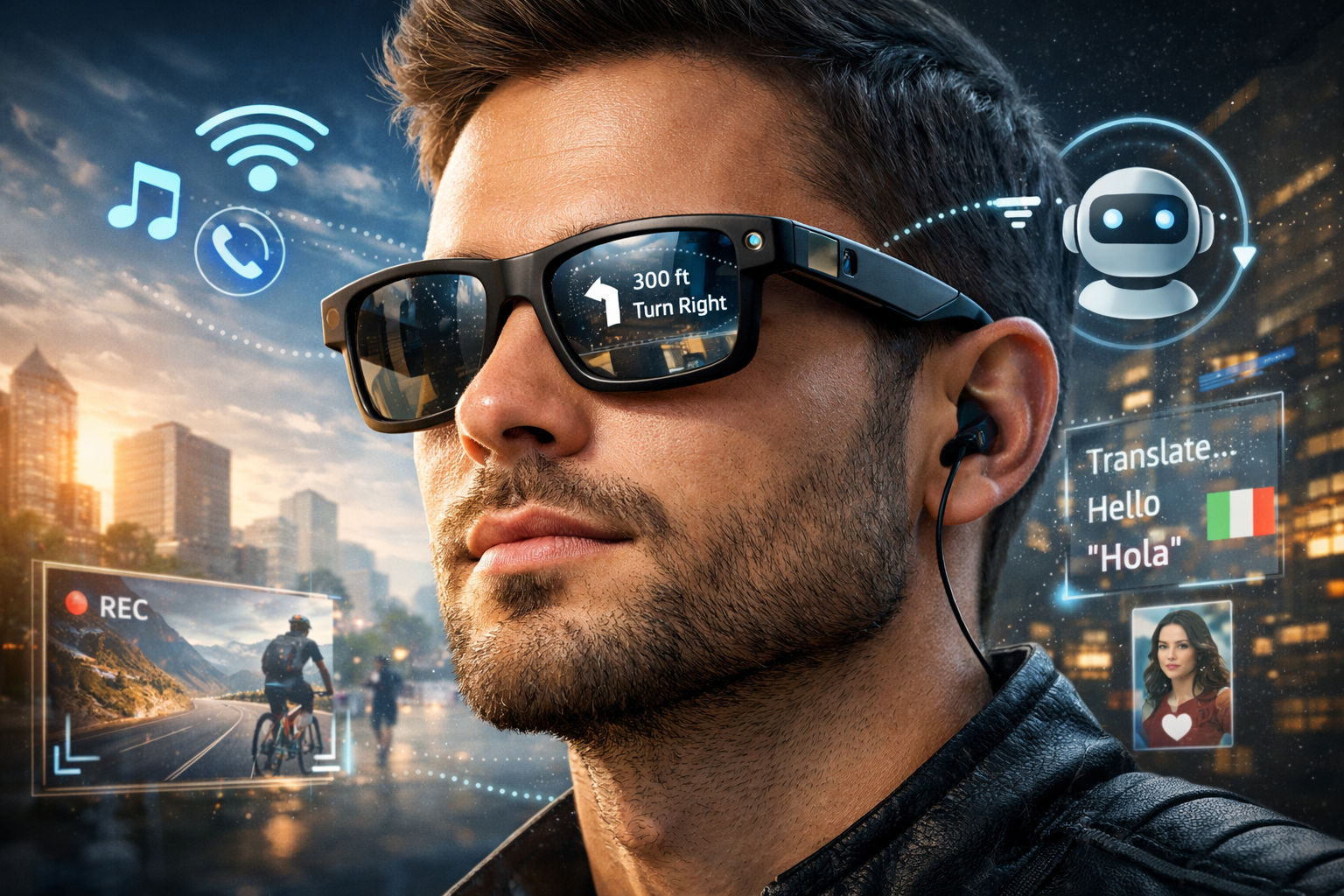
Tech sunglasses—also known as smart glasses or connected eyewear—are transforming how we capture memories, listen to music, navigate cities, and even interact with augmented reality. Once a futuristic concept, smart sunglasses are now practical, stylish, and packed with AI-driven features.
In this in-depth guide, we’ll explore what tech sunglasses are, how they work, their key features, the best models on the market, use cases, benefits, limitations, and what the future holds for this rapidly growing wearable technology sector.
What Are Tech Sunglasses?
Tech sunglasses are wearable devices that combine traditional eyewear with advanced technology such as:
- Bluetooth connectivity
- Built-in speakers
- Microphones
- Cameras
- Augmented reality (AR) displays
- Voice assistants
- AI integration
Unlike traditional sunglasses, these smart wearables go beyond UV protection. They allow users to take calls, listen to music, record videos, receive directions, translate languages in real time, and even access AI assistants—without ever touching their phone.
Smart sunglasses are part of the broader wearable tech ecosystem, alongside smartwatches, fitness trackers, and wireless earbuds.
How Tech Sunglasses Work
Tech sunglasses integrate miniaturized hardware into the frame. Most models include:
- Micro-speakers embedded in the temples
- Touch controls or gesture sensors
- Dual microphones for voice commands and calls
- Rechargeable batteries
- Bluetooth modules
- Cameras (in select models)
- Micro-displays (in AR versions)
The frames are designed to look like regular sunglasses while discreetly housing the electronics.
Advanced AR models project information into your field of view using waveguide displays or micro-LED projectors. These overlays can show navigation arrows, notifications, or contextual data.
AI-powered models use onboard processing or cloud connectivity to interpret voice commands, identify objects, and deliver real-time information.
Key Features of Modern Tech Sunglasses
1. Open-Ear Audio Technology
Most smart sunglasses use directional speakers that project sound toward your ears without blocking ambient noise. This allows users to remain aware of their surroundings while listening to music or podcasts.
2. Hands-Free Calling
Built-in microphones with noise reduction allow users to take calls without removing their phone from their pocket.
3. Voice Assistant Integration
Many tech sunglasses integrate with voice assistants like Siri, Google Assistant, or proprietary AI systems.
4. Camera and Video Capture
Some models include discreet cameras that allow users to take photos and record short videos from a first-person perspective.
5. Augmented Reality (AR) Displays
Advanced models overlay digital information into your field of view, enhancing navigation, fitness tracking, and real-time data access.
6. AI Capabilities
Next-generation smart glasses are integrating AI for:
- Real-time language translation
- Object recognition
- Context-aware information
- Live transcription
Leading Tech Sunglasses on the Market
Ray-Ban Meta Smart Glasses

The collaboration between Meta Platforms and Ray-Ban has produced one of the most popular smart sunglasses available today.
Key features:
- Built-in 12MP ultra-wide camera
- Open-ear speakers
- Voice control via Meta AI
- Livestream capability
- Stylish Wayfarer and Headliner designs
These glasses focus heavily on content creation and AI-powered assistance.
Bose Frames

Bose Corporation introduced Bose Frames as audio-first smart sunglasses.
Highlights:
- Premium directional speakers
- No camera (privacy-friendly design)
- Lightweight and stylish
- Excellent sound clarity
Bose Frames are ideal for users who prioritize audio quality over cameras or AR.
Snapchat Spectacles
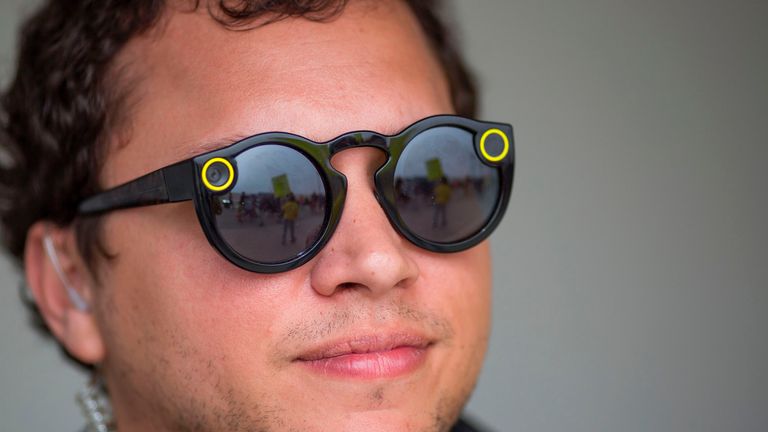
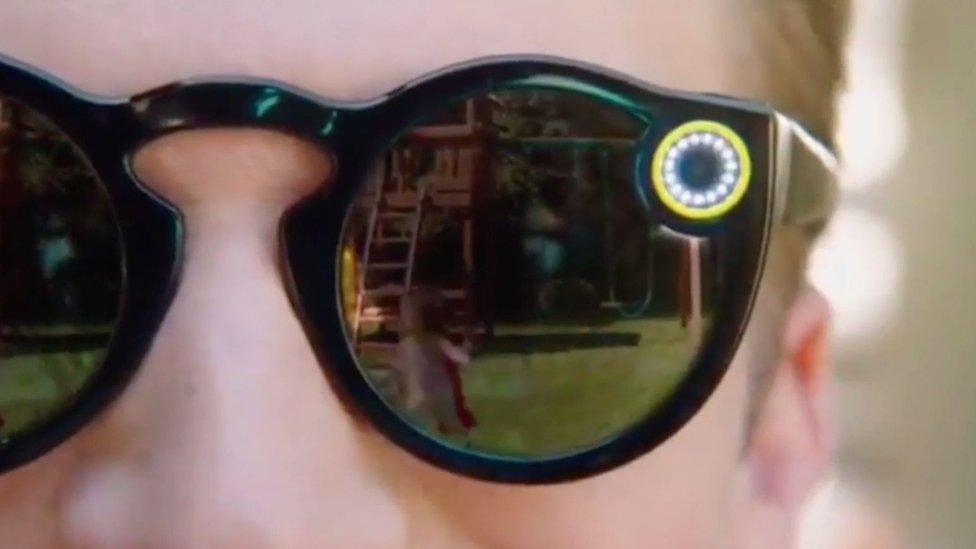
Developed by Snap Inc., Spectacles focus on AR and content creation.
Features include:
- Built-in cameras
- AR lens capabilities
- Integration with Snapchat
- Developer-focused AR platform
These glasses are geared toward creators and AR enthusiasts.
Benefits of Tech Sunglasses
1. Convenience
Hands-free communication and audio access eliminate the need to constantly check your smartphone.
2. Seamless Content Creation
Point-of-view recording makes capturing spontaneous moments easier.
3. Enhanced Safety
Open-ear audio keeps you aware of traffic and surroundings while cycling or walking.
4. Productivity Boost
AR overlays and voice assistants streamline navigation, reminders, and information retrieval.
5. Fashion Meets Technology
Modern smart sunglasses are stylish and nearly indistinguishable from traditional eyewear.
Use Cases for Smart Sunglasses
Everyday Urban Living
Get turn-by-turn directions projected into your field of vision without staring at your phone.
Fitness and Outdoor Activities
Cyclists and runners can receive performance data and coaching prompts in real time.
Travel and Language Translation
AI-enabled glasses can translate signs and conversations instantly.
Content Creation
Vloggers and influencers use camera-enabled glasses to record immersive POV videos.
Professional Applications
Technicians, field engineers, and warehouse workers use AR glasses for remote assistance and task guidance.
Tech Sunglasses vs. Traditional Smart Glasses
Not all smart eyewear is created equal. There are two main categories:
Audio-First Smart Sunglasses
- Focus on music and calls
- No display
- More affordable
- Better battery life
AR Smart Glasses
- Include visual overlays
- More advanced hardware
- Higher price points
- Shorter battery life
The choice depends on your needs: entertainment and communication vs. immersive digital augmentation.
Privacy Concerns and Ethical Considerations
Camera-equipped sunglasses raise valid privacy concerns. Indicators such as LED recording lights are designed to alert others when recording is active.
Manufacturers must balance innovation with responsible design to maintain public trust.
Data security is another major concern, particularly when AI assistants process voice commands and environmental data.
Battery Life and Charging
Battery life varies widely:
- Audio-only glasses: 5–8 hours
- Camera-enabled models: 4–6 hours
- AR glasses: 2–5 hours
Most models come with charging cases similar to wireless earbuds.
Future innovations in battery density and energy-efficient processors will extend usage times significantly.
The Role of AI in Smart Sunglasses
Artificial intelligence is becoming the defining feature of next-generation tech sunglasses.
AI-powered capabilities include:
- Real-time object identification
- Facial recognition (restricted in many regions)
- Instant translations
- Context-aware recommendations
- Voice-driven task automation
With the integration of large language models, smart glasses are evolving into wearable AI companions.
Imagine asking your glasses:
- “What building is this?”
- “Translate this menu.”
- “Summarize this meeting.”
The glasses can see, hear, and respond—creating a new paradigm of human-computer interaction.
Future Trends in Tech Sunglasses
1. Lighter and More Fashionable Designs
Technology miniaturization will continue making frames slimmer and more stylish.
2. Longer Battery Life
Solid-state batteries and low-power AI chips will extend daily usability.
3. True Augmented Reality
Full-color waveguide displays will make AR overlays brighter and more immersive.
4. Health Monitoring
Future models may integrate biometric sensors for:
- Heart rate
- UV exposure tracking
- Eye health metrics
5. 5G and Edge Computing Integration
Faster wireless connectivity will reduce latency in AI-driven interactions.
Are Tech Sunglasses Worth It?
Smart sunglasses are ideal if you:
- Want hands-free audio and calls
- Create social media content
- Value wearable AI assistance
- Enjoy early adoption of new tech
They may not be necessary if you:
- Rarely use voice assistants
- Prefer complete privacy
- Need all-day battery without charging
The market is still evolving, but adoption is growing rapidly.
Buying Guide: What to Look For
When shopping for tech sunglasses, consider:
1. Audio Quality
Test speaker clarity and volume.
2. Battery Life
Check real-world usage reviews.
3. Camera Resolution
If content creation matters, prioritize higher megapixels and stabilization.
4. Comfort and Weight
Wearability is critical for daily use.
5. App Ecosystem
Strong app integration enhances functionality.
6. Price
Smart sunglasses range from $150 to $500+ depending on features.
The Future of Wearable Vision
Tech sunglasses represent the next evolution in personal computing. Just as smartphones replaced feature phones, smart eyewear may gradually replace handheld devices for many daily tasks.
We are moving toward a world where digital information is seamlessly layered onto physical reality.
As AI grows more advanced and hardware becomes more refined, tech sunglasses could become as common as wireless earbuds are today.
Final Thoughts
Tech sunglasses are no longer experimental gadgets—they are practical, stylish, and increasingly intelligent wearables.
From audio streaming and hands-free calls to AI-powered real-time translation and augmented reality overlays, smart sunglasses are redefining how we interact with technology.
Whether you’re a content creator, commuter, traveler, or tech enthusiast, smart eyewear offers a glimpse into the future of computing—right before your eyes.
The next decade will likely see massive innovation in this space, making tech sunglasses lighter, smarter, and more indispensable than ever before.