
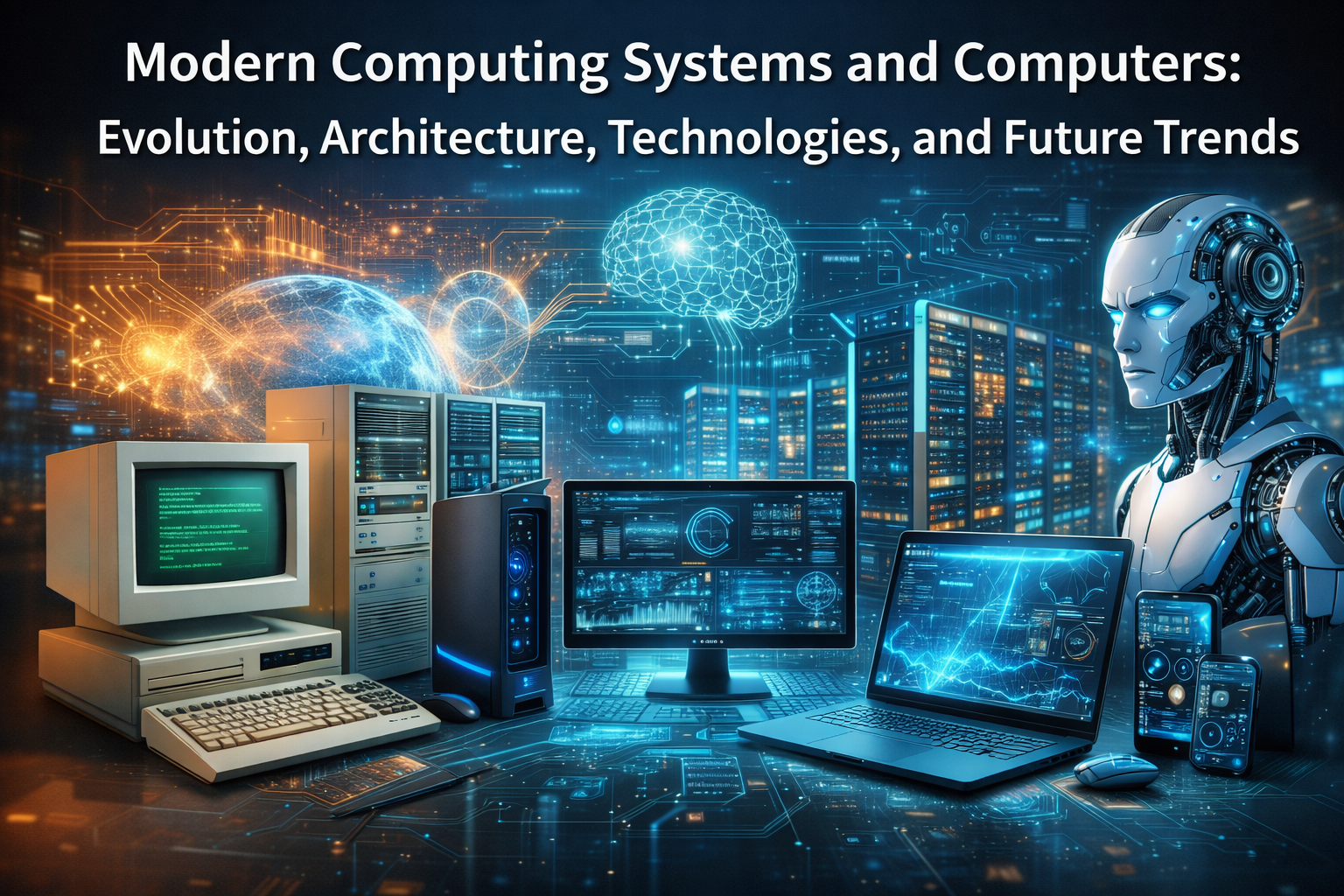
Modern computing systems have transformed every aspect of human life, from communication and education to healthcare, business, and entertainment. Computers are no longer limited to large machines used by scientists or governments; today they exist in smartphones, vehicles, homes, and even wearable devices. The rapid development of hardware, software, artificial intelligence, and cloud technologies has led to an interconnected digital ecosystem that powers the modern world.
A computing system refers to the combination of hardware, software, data, and users working together to process information. Over the past several decades, computing systems have evolved from massive room-sized machines to compact yet powerful devices capable of performing billions of operations per second.
This article explores modern computing systems, their evolution, architecture, types, technologies, applications, and future trends shaping the next generation of computers.
Evolution of Computers

4
The history of computers is often divided into generations based on technological advancement.
First Generation (1940–1956)
The first computers used vacuum tubes for processing and magnetic drums for memory. One of the earliest general-purpose computers was ENIAC, which occupied an entire room and consumed enormous amounts of electricity.
These computers were:
- Extremely large
- Expensive
- Prone to overheating
- Limited in processing speed
Despite their limitations, they laid the foundation for digital computing.
Second Generation (1956–1963)
Transistors replaced vacuum tubes, making computers smaller, faster, and more reliable. This innovation significantly reduced power consumption and heat generation.
Companies such as IBM played a major role in commercializing computers during this period.
Third Generation (1964–1971)
Integrated circuits (ICs) allowed multiple transistors to be placed on a single chip. This advancement improved performance and reliability while reducing size.
Operating systems also became more sophisticated, enabling multi-tasking and better resource management.
Fourth Generation (1971–Present)
The invention of microprocessors revolutionized computing. Microprocessors placed the central processing unit (CPU) onto a single chip, enabling the development of personal computers.
Companies such as Intel introduced powerful processors that fueled the personal computing revolution.
The rise of companies like Apple and Microsoft further accelerated computer adoption worldwide.
Fifth Generation (Present and Beyond)
Modern computers increasingly rely on artificial intelligence, machine learning, and parallel processing. Emerging technologies such as quantum computing and neuromorphic computing represent the future of advanced computing systems.
Components of a Modern Computing System
4
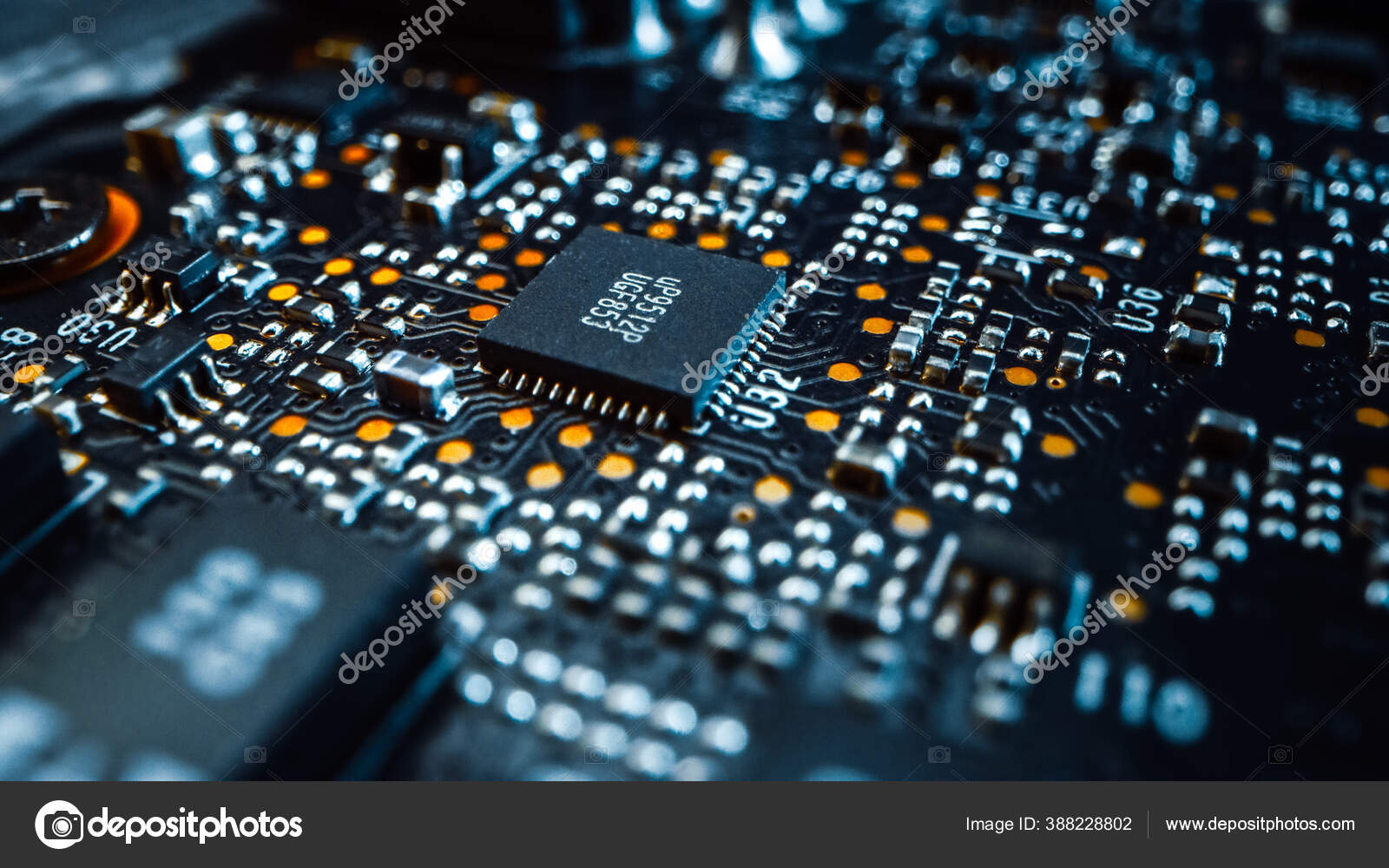
A modern computing system consists of several key components that work together to process data efficiently.
1. Central Processing Unit (CPU)
The CPU is the brain of the computer. It performs calculations and executes instructions.
Modern CPUs include:
- Multiple cores
- High-speed clock cycles
- Advanced cache memory
2. Memory (RAM)
Random Access Memory (RAM) stores temporary data required for active processes. Higher RAM capacity improves multitasking and performance.
3. Storage Devices
Storage systems store data permanently.
Common storage types include:
- Solid-State Drives (SSD)
- Hard Disk Drives (HDD)
- Cloud storage
SSDs are faster and more reliable than traditional HDDs.
4. Input Devices
Input devices allow users to interact with computers.
Examples include:
- Keyboard
- Mouse
- Touchscreen
- Microphone
5. Output Devices
Output devices present processed information to users.
Examples include:
- Monitors
- Printers
- Speakers
6. Graphics Processing Unit (GPU)
GPUs are specialized processors designed for graphical computations and parallel processing. They are essential for gaming, video editing, and artificial intelligence workloads.
Types of Modern Computers

4
Modern computing systems are available in various forms, depending on their purpose and processing power.
Supercomputers
Supercomputers are the most powerful computers in the world. They are used for:
- Weather forecasting
- Scientific simulations
- Space research
- Artificial intelligence
These systems perform trillions of calculations per second.
Mainframe Computers
Mainframes are used by large organizations for processing massive amounts of data.
Applications include:
- Banking systems
- Airline reservation systems
- Government databases
Personal Computers (PCs)
Personal computers are the most common type of computing device.
They include:
- Desktop computers
- Laptops
PCs are widely used for education, business, and entertainment.
Mobile Computers
Smartphones and tablets are compact computing devices that provide high processing power in portable form.
Mobile computing has significantly changed how people access information.
Embedded Systems
Embedded computers are specialized systems built into devices such as:
- Cars
- Smart appliances
- Medical equipment
These systems perform dedicated tasks.
Modern Computing Technologies


4
Several advanced technologies define modern computing systems.
Cloud Computing
Cloud computing allows users to store and access data over the internet rather than local devices.
Benefits include:
- Scalability
- Remote access
- Cost efficiency
Major cloud providers include:
- Amazon Web Services
- Google Cloud
- Microsoft Azure
Cloud computing has transformed business operations worldwide.
Artificial Intelligence (AI)
AI enables computers to simulate human intelligence.
Applications include:
- Speech recognition
- Image processing
- Automation
- Predictive analytics
AI systems rely heavily on machine learning algorithms and large datasets.
Internet of Things (IoT)
IoT refers to interconnected devices that communicate via the internet.
Examples include:
- Smart homes
- Smart cities
- Wearable devices
IoT has expanded the scope of computing beyond traditional devices.
Edge Computing
Edge computing processes data closer to its source rather than relying entirely on cloud servers.
Advantages include:
- Faster processing
- Reduced latency
- Improved real-time performance
This technology is essential for autonomous vehicles and real-time analytics.
Role of Operating Systems in Modern Computing
4
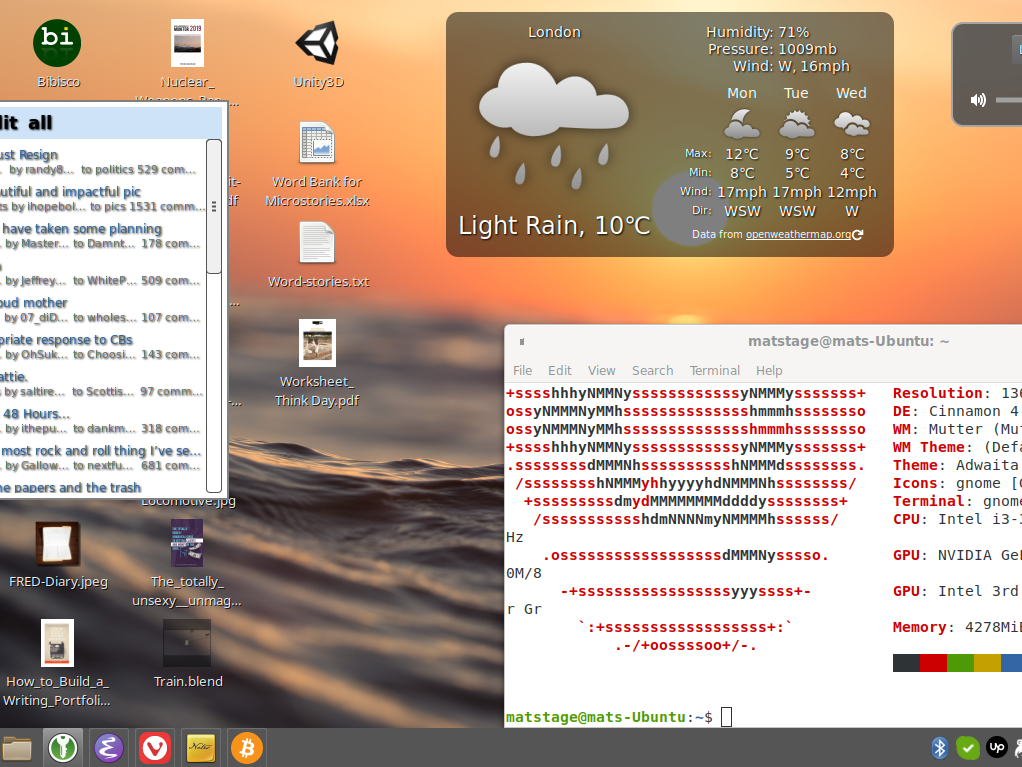
Operating systems manage hardware resources and provide a platform for software applications.
Popular operating systems include:
- Microsoft Windows
- macOS
- Linux
- Android
Operating systems perform essential functions such as:
- Process management
- Memory management
- Device control
- Security enforcement
Modern operating systems also include advanced graphical interfaces and cloud integration.
Applications of Modern Computing Systems
Modern computing systems are used in almost every industry.
Education
Digital learning platforms allow students to access online courses and virtual classrooms.
Healthcare
Computers are used for:
- Medical imaging
- Patient data management
- Robotic surgeries
AI-powered systems help doctors diagnose diseases more accurately.
Business and Finance
Computers enable:
- Online banking
- E-commerce
- Data analytics
Businesses rely on computing systems for decision-making and automation.
Entertainment
Computing systems power:
- Video streaming
- Gaming
- Virtual reality
High-performance GPUs have significantly improved digital entertainment experiences.
Cybersecurity in Modern Computing
As computing systems expand, cybersecurity becomes increasingly important.
Common threats include:
- Malware
- Phishing
- Data breaches
- Ransomware
Modern security strategies include:
- Encryption
- Multi-factor authentication
- Firewalls
- AI-based threat detection
Organizations are investing heavily in cybersecurity to protect digital assets.
Future Trends in Computing Systems

4
The future of computing will be shaped by emerging technologies that push beyond the limits of traditional systems.
Quantum Computing
Quantum computers use quantum bits (qubits) instead of traditional binary bits.
These systems could solve complex problems far faster than classical computers.
Companies such as IBM Quantum and Google Quantum AI are leading research efforts.
Artificial Intelligence Integration
AI will become deeply embedded in all computing systems, enabling smarter automation and personalized experiences.
Neuromorphic Computing
Neuromorphic chips are designed to mimic the human brain, improving efficiency for AI tasks.
Green Computing
Future computing systems will focus on reducing energy consumption and environmental impact.
Conclusion
Modern computing systems have evolved dramatically from early mechanical machines to powerful digital systems that drive global innovation. Advances in hardware, software, cloud computing, artificial intelligence, and networking technologies have made computers faster, smarter, and more accessible than ever before.
As emerging technologies such as quantum computing and AI continue to develop, computing systems will become even more integrated into daily life. The future promises intelligent, energy-efficient, and highly automated computing environments that will reshape industries and society.
Computers are no longer just tools—they are the foundation of the modern digital world.