The year 2026 feels less like a distant future and more like a gentle, yet persistent, nudge into a new era of interaction. Gone are the days when a “next-gen” device merely meant a faster chip or a slightly better camera. Today, the conversation has shifted. Our gadgets are no longer just tools; they are extensions of our senses, partners in our productivity, and silent guardians of our privacy. This isn’t just about iteration; it’s about integration, sustainability, and a fundamental rethinking of what hardware should be.
From the spatial computing platforms that promise to dissolve the screen barrier, to the modular devices championing the right to repair, and the subtly intelligent wearables that monitor our every biometric — next-gen hardware is rewriting the rulebook. It’s an exciting, sometimes unsettling, landscape where the lines between the physical and digital blur, and the very definition of “a device” is being radically expanded.
The Spatial Revolution: Screens are Out, Realities are In
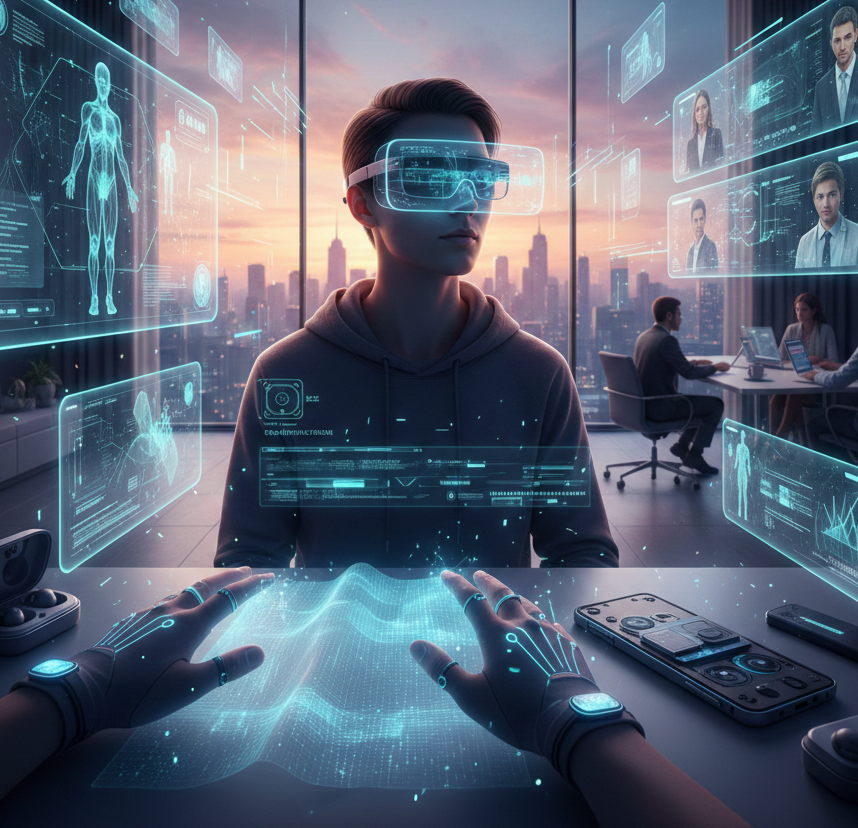
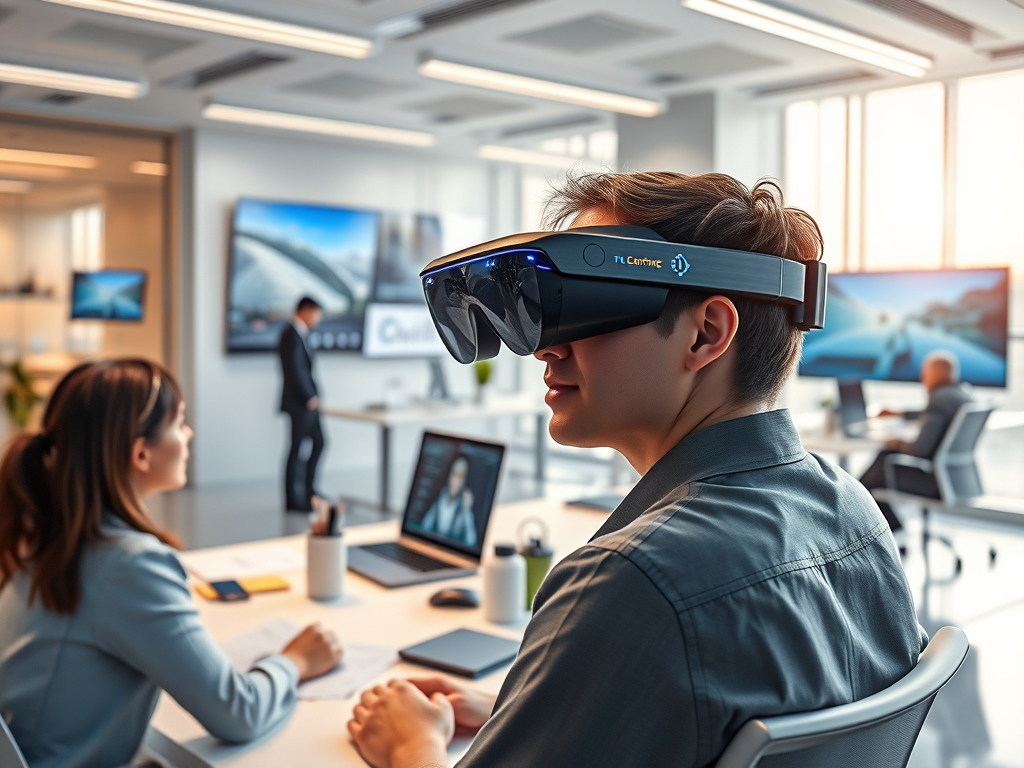
Perhaps the most palpable shift in next-gen hardware is the relentless march towards spatial computing. The clunky VR headsets of yesteryear have evolved into sleek, powerful mixed-reality glasses and standalone spatial computers that seamlessly blend digital information with our physical surroundings. Apple’s Vision Pro, Meta’s Quest 4, and emerging players like Lynx are no longer niche gaming devices; they are legitimate productivity platforms, communication hubs, and immersive entertainment systems.
Imagine a workday where your multiple monitors are replaced by floating, resizable windows that adhere to the walls of your office, visible only to you. Your video calls feature lifelike avatars that share your physical space, making remote collaboration feel genuinely present. Architects can walk through their unbuilt designs, doctors can visualize patient data directly on a holographic anatomical model, and casual users can watch a movie on a screen that feels 100 feet wide, without ever leaving their living room.
This isn’t just about putting a screen closer to your eyes; it’s about dissolving the screen altogether. The hardware has become intelligent enough to understand your environment, track your gaze, and respond to natural gestures with astonishing precision. Hand tracking, eye tracking, and even subtle head movements become your input methods, making traditional controllers feel archaic. The processing power required for this level of real-time rendering and environmental understanding is immense, pushing the boundaries of miniaturized custom silicon and low-latency wireless communication. The challenges remain—battery life, social acceptance, and the sheer cost of entry—but the trajectory is undeniable. Spatial computing is not just a feature; it’s an entirely new paradigm of interaction, and the hardware driving it is becoming increasingly sophisticated and seamlessly integrated.
Modular & Sustainable: The Right to Repair Takes Center Stage
For years, the tech industry seemed to operate on a philosophy of planned obsolescence. Devices were sealed, parts were proprietary, and repairs were often more expensive than replacements. But the tide is turning. Driven by consumer demand, legislative pressure (especially in the EU), and a growing environmental consciousness, next-gen hardware is embracing modularity and sustainability as core design principles.
The “right to repair” isn’t just a political slogan anymore; it’s a selling point. Companies are designing products with user-replaceable components, easily accessible batteries, and openly available schematics. This extends beyond just smartphones and laptops. We’re seeing modular smart home devices where individual sensors or communication modules can be swapped out, extending the lifespan of the entire system. Printers are being designed with easily refillable ink tanks and components that can be replaced by the end-user.
This shift has profound implications. For consumers, it means greater longevity for their investments, reduced electronic waste, and the satisfaction of maintaining their own devices. For manufacturers, it forces a more thoughtful approach to design, prioritizing durability and repairability over sleek, unibody aesthetics that sacrifice serviceability. The materials themselves are also undergoing a revolution. Recycled plastics, ethically sourced rare earth metals, and even bio-degradable components are becoming standard. Companies are exploring closed-loop manufacturing processes, where old devices are broken down and their materials reused in new products. The true “next-gen” device isn’t just powerful; it’s responsible.
Wearables Reimagined: The Invisible Interface

Wearable technology has moved far beyond step counters and heart rate monitors. In 2026, the most compelling wearables are the ones you barely notice, silently gathering a wealth of data about your health, environment, and even your emotional state. These aren’t just gadgets; they are highly personalized diagnostic tools and predictive assistants.
Smart rings, like the Oura Ring and emerging competitors, have become sophisticated biometric hubs, tracking sleep cycles, body temperature, heart rate variability, and stress levels with medical-grade accuracy. They can predict illness onset, advise on optimal recovery times, and even provide real-time feedback on mindfulness exercises. Earbuds have also evolved beyond audio playback, incorporating bio-sensors to monitor blood oxygen, gait analysis for fall detection, and even EEG sensors for brainwave monitoring, opening doors for advanced focus and sleep optimization.
The key to next-gen wearables is their seamless integration and intelligent interpretation of data. They work in concert with AI algorithms on your smartphone or in the cloud to provide actionable insights, not just raw numbers. Imagine an earbud detecting early signs of a cold based on your vitals and suggesting a preventive supplement, or a smart ring subtly nudging you to take a break when it senses rising stress levels. Privacy and data security are paramount here, with strong encryption and user control over data sharing becoming standard features. The goal is to make health monitoring effortless and proactive, transforming wearables from simple trackers into essential partners in personal well-being.
The Rise of Edge AI Hardware: Smart, Secure, and Swift
While cloud computing still reigns supreme for massive data processing, next-gen hardware is increasingly embedding powerful AI capabilities directly onto devices at the “edge” of the network. This means faster responses, enhanced privacy, and the ability for devices to function intelligently even without a constant internet connection.
Your smartphone, for example, is no longer just sending all your photo processing or voice commands to the cloud. Its onboard neural processing unit (NPU) can handle complex tasks like real-time language translation, advanced image recognition, and predictive text generation entirely on-device. Smart home hubs are processing voice commands and managing routines locally, reducing latency and reliance on external servers. Autonomous vehicles are performing critical decision-making on their own dedicated AI hardware, ensuring split-second reactions.
The benefits of edge AI are multifaceted. Speed is a major factor; processing data locally eliminates the round trip to the cloud. Privacy is another critical advantage, as sensitive user data can remain on the device without ever leaving your possession. Furthermore, edge AI reduces the burden on data centers, contributing to energy efficiency. This trend is driving innovation in specialized low-power AI chips and optimized software frameworks that allow complex models to run efficiently on compact, battery-powered hardware. It’s a foundational shift that empowers devices to be truly intelligent and autonomous.
Haptic Feedback Reimagined: Feeling the Digital World
Next-gen hardware isn’t just about what we see and hear; it’s increasingly about what we feel. Haptic feedback technology has moved far beyond simple vibrations, evolving into sophisticated systems that can simulate texture, weight, and resistance, blurring the lines between the digital and physical.
In spatial computing, advanced haptic gloves or wristbands can make you “feel” the virtual objects you interact with, giving digital interfaces a tangible presence. Imagine touching a virtual fabric and feeling its weave, or manipulating a holographic control panel with the satisfying click of a physical button. Gaming takes on a new dimension, with weapon recoil, environmental textures, and even the splash of water being translated into tactile sensations.
Beyond entertainment, haptics are transforming professional fields. Surgeons can practice complex procedures on haptic-enabled simulators that provide realistic resistance and texture feedback. Engineers can “feel” the stress points in a digital model, and artists can sculpt virtual clay with incredible precision. The hardware behind this involves miniature actuators, precise force feedback mechanisms, and sophisticated algorithms that translate digital information into nuanced physical sensations. It’s an immersive technology that adds a crucial layer of realism to our interactions with the digital world.
The Road Ahead: Challenges and Opportunities
The landscape of next-gen hardware is undeniably exciting, but it’s not without its challenges.
- Privacy and Security: As devices become more integrated into our lives and collect more personal data, ensuring robust privacy and security protocols is paramount.
- Accessibility: Making these advanced technologies accessible to everyone, regardless of physical ability or economic status, remains a critical goal.
- Energy Consumption: The immense processing power required for spatial computing and edge AI necessitates continuous innovation in energy efficiency and battery technology.
- Digital Divide: As technology accelerates, the risk of leaving behind those without access or understanding grows, demanding responsible development and deployment.
Yet, the opportunities are even greater. Next-gen hardware promises to revolutionize education, healthcare, entertainment, and how we connect with each other. It empowers us with new forms of expression, enhances our productivity, and offers unprecedented insights into our own well-being.
In 2026, our gadgets are no longer just tools; they are intelligent companions, seamlessly integrated into the fabric of our lives. They are designed not just to perform tasks, but to enhance our perception, extend our capabilities, and ultimately, to make our complex world a little more intuitive. The future isn’t just being built; it’s being felt, seen, and experienced through the remarkable evolution of next-gen hardware.